Kleber Mendonça Filho | 2025
Amid the political turmoil of 1977 Brazil, a technology expert is forced into hiding and seeks help from the underground resistance as he tries to flee the country with his young son. Nominated for four Oscars.
The Weekly Intelligence Notes include a wide range of articles and commentary to inform our readers. It also includes several paid advertisements. Views expressed in articles and advertising are those of the authors and advertisers; they do not reflect AFIO's support or endorsement. Have an article to share? Read our submission guidelines.
Click on the categories below to navigate between sections of articles. The Books & Film leads to a separate page containing content for the current week and the past, all in one location. To find announcements and other items that were on the old format, just go to your Member Home page. The format may continue to evolve as we discover what works best for our members, so send your feedback to winseditor@afio.com.
*No issue released
27 Dec 25-2 Jan 26*
20-26 Dec 2025*
13-19 Dec 2025
6-12 Dec 2025
29 Nov-5 Dec 2025
22-28 Nov 2025*
15-21 Nov 2025
8-14 Nov 2025
1-7 Nov 2025
26 Jul-1 Aug 2025
19-25 Jul 2025
12-18 Jul 2025
5-11 Jul 2025
28 Jun-4 Jul*
25 Apr-2 May 2025
16-22 Apr 2025*
9-15 Apr 2025
2-8 Apr 2025
27 Dec 25-2 Jan 26*
20-26 Dec 2025*
13-19 Dec 2025
6-12 Dec 2025
29 Nov-5 Dec 2025
22-28 Nov 2025*
15-21 Nov 2025
8-14 Nov 2025
1-7 Nov 2025
26 Jul-1 Aug 2025
19-25 Jul 2025
12-18 Jul 2025
5-11 Jul 2025
28 Jun-4 Jul*
25 Apr-2 May 2025
16-22 April 2025*
9-15 Apr 2025
2-8 Apr 2025

Kleber Mendonça Filho | 2025
Amid the political turmoil of 1977 Brazil, a technology expert is forced into hiding and seeks help from the underground resistance as he tries to flee the country with his young son. Nominated for four Oscars.

Editors: Florina Cristiana Matei, Carolyn Halladay | Routledge | 24 March 2026
This handbook examines media portrayals of intelligence institutions, cultures, and conduct in various political regimes, showing how they inflect and reflect public views of the intelligence community.
Specifically, this volume assesses how popular media portrayals of intelligence agencies influence such realms as public perception, opinion, and support of intelligence; recruitment endeavours; democratic transformation of intelligence services; transparency versus secrecy; outreach and messaging efforts; and intelligence interagency sharing, cooperation, and collaboration, both domestically and internationally. The book chapters are divided into three thematic sections:
Section I: Theoretical Concepts
Section II: Case Studies of Non-Democratic or Nominally Democratic Regimes
Section III: Case Studies of Consolidated and Consolidating Democracies
The volume also looks toward newer and emerging media around the world to explore ways in which both the intelligence sector and its image in media and popular culture may be changing.
Filling a clear gap in the literature, this book will be of much interest to students of intelligence studies, media and communication studies, national security, and international relations.

Felix Keller | Self Published | 25 August 2025
Unlock the full potential of Social Media Intelligence (SOCMINT) with Felix Keller’s definitive guide, SOCMINT 360: A Comprehensive Guide to Social Media Intelligence. This expertly crafted book is your essential resource for mastering the art and science of gathering, analyzing, and leveraging social media data for actionable intelligence.
Why SOCMINT 360?
In an era where social media is a central hub of communication and information, understanding how to harness its power is crucial for organizations, governments, and professionals alike. SOCMINT 360 delivers a thorough and practical exploration of SOCMINT, offering readers an in-depth look at the tools, techniques, and strategies necessary for effective social media intelligence.
What You’ll Discover:
Comprehensive Coverage: Dive into the core concepts of SOCMINT, from its definition and evolution to its comparison with traditional OSINT methods. Understand how social media has transformed intelligence gathering and why it is a game-changer in today’s information landscape.
Platform Insights: Gain a detailed overview of major social media platforms, including their demographics, user behaviors, and privacy policies. Learn how algorithms affect content visibility and discover lesser-known platforms that could offer unique insights.
Data Collection Techniques: Master both manual and automated data collection methods. Learn to navigate API limitations, ensure data integrity, and leverage advanced tools to gather comprehensive social media data.
Analysis and Application: Explore fundamental and advanced analysis techniques, including sentiment analysis, network analysis, and image and video recognition. Understand how to interpret data to make informed decisions and draw actionable insights.
Real-time Monitoring: Discover how to set up effective real-time monitoring systems and create alerts for critical events. Learn to monitor trends and hashtags, and examine case studies of successful real-time SOCMINT operations.
Geolocation Strategies: Understand the role of geotagging and geospatial analysis in SOCMINT. Learn to identify location patterns, use geolocation in investigative operations, and navigate ethical considerations.
Counterintelligence Measures: Explore techniques for identifying and countering misinformation and social media manipulation. Learn strategies for monitoring misinformation campaigns and managing public perception.
Practical Case Studies: Benefit from real-world case studies showcasing SOCMINT applications in law enforcement, corporate brand management, government crisis management, and activism. See how SOCMINT strategies have been successfully implemented across various sectors.
Legal and Ethical Considerations: Navigate the complex legal and ethical landscape of SOCMINT. Understand global legal frameworks, compliance issues, and best practices for ethical operations.
Future Trends: Stay ahead of the curve with insights into emerging trends in social media, the role of artificial intelligence, and the impact of new technologies on SOCMINT. Prepare for future developments and learn how to adapt your strategies accordingly.
Tools and Resources: Explore a wide range of SOCMINT tools, from open-source to commercial options. Learn how to build and integrate a custom SOCMINT toolkit and find resources for continuous learning and skill development.
Building a SOCMINT Strategy: Develop a comprehensive SOCMINT plan, integrate it into broader intelligence operations, and establish key performance indicators (KPIs) to measure success. Adapt your strategies to changing social media landscapes and ensure ongoing effectiveness.

Martin Griffin | Edinburgh University Press | 31 May 2024
Reading Espionage Fiction: Narrative, Conflict and Commitment from World War I to the Contemporary Era probes the ways in which the struggles and loyalties of political modernity have been portrayed in the espionage story over the course of the twentieth and twenty-first centuries. Reading works by authors such as Somerset Maugham, Helen MacInnes, John le Carré, Sam E. Greenlee and Gerald Seymour as popular literature deserving of sustained attention, this book shows how these narratives have both created a modern genre and, at the same time, sought an escape from its limitations. Martin Griffin takes up the importance of plot and character and argues that, in this branch of fiction, the personal has always and ever been political.

Zhang Yimou | Netflix series, 2026
Vital intelligence leaked. The national security team vowed to find the traitor, but arrests failed repeatedly. As tension mounted, suspicion turned inward to the team itself. A silent battle unfolded amid trust and betrayal. Oscar-nominated Zhang Yimou directs the first film “led and created” by China’s Ministry of State Security.

Chris Jones | Pen and Sword Military | 30 March 2026
In his short life, Liverpool-born Alexander Foote went from being a volunteer in the International Brigade in Spain to becoming an agent of Soviet military intelligence in Switzerland. Pretending to his friends that he was a dim-witted Englishman with private means, Foote became the key telegraphist of the so-called ‘Red Three’ network of radio stations, communicating top secret German intelligence to the USSR from under the noses of the Swiss authorities. The information from Foote’s Morse key originated from sources in Germany and came to Foote via the enigmatic figure of Rudolph Rossler, known as Agent Lucy. Where he obtained the information from is a mystery that has never been solved. During the battles of Stalingrad and Kursk, Soviet generals came to depend on the information from Foote’s transmitter and those of his comrades.
On his release from a ten-month remand in a Swiss gaol on an espionage charge, Foote absconded to Paris in 1944 before being invited for debriefing in Moscow. When he arrived, he became aware that he was under suspicion of being a British spy and it took all his wit to talk his comrades in Soviet intelligence out of sending him to the gulag: a fate that waited for many of the others in his Swiss network.
Disillusioned with life in the USSR, Foote approached British intelligence while he was on a Soviet mission in Berlin. He made them an offer: if they got him back to Britain he would tell them all he knew about Soviet intelligence, from the inside.
This is his story.

Scott A. Moseman | University Press of Kansas | 18 March 2025
From 1882 to 1947—the year the CIA was established—strategic military intelligence organizations struggled to define their missions. The American public, government and military leaders, and intelligence professionals all had competing ideas of what military intelligence should be and do. The quest of strategic military intelligence organizations to define themselves and their mission was directly influenced by the trends of a growing American military and maturing American society in the late-nineteenth and early-twentieth centuries. This dynamic and insightful facet of intelligence history, however, has remained largely in the shadows. How did government leaders and American society define strategic military intelligence organizations? How did these organizations describe themselves in their service to the US military and the American public as they evolved from a four-man office in 1882 to a multi-organizational operation with a staff of thousands by the 1940s?
In Defining the Mission, Scott Moseman examines how US strategic military intelligence organizations have adapted to several external and internal factors in finding their raison d’être. Focusing on the Office of Naval Intelligence and the Military Intelligence Division, Moseman explores themes including the growth of the American military, internationalism versus isolationism, the increasing complexity of the government, military professionalism, Hamiltonian versus Jeffersonian ideals, military progressivism, and domestic security. Exploring the contours of the dynamic relationships between strategic military intelligence organizations and government, military, and society, Moseman shows how the mission and work of military intelligence reflects the very society it serves.

Heinz Hohne | Doubleday | 31 October 1979
Viewing Hitler's director of espionage as some bizarre Jekyl-and-Hyde figure, Hohne investigates Wilhelm Canaris's involvement in several conspiracies to overthrow the Nazi regime, including one of many unsuccessful attempts to assassinate Hitler.

Paul Coates | Netflix series | 2026
Ex-spies Simon and Meret operate a Berlin safe house until a past threat resurfaces. Now they're fleeing hitmen, Russian agents, German BND, ex-lovers, and old enemies while trying to save their marriage.

Simon Willmetts, et al | Georgetown University Press | 02 March 2026
Intelligence agencies are traditionally understood as cloistered entities. Hidden behind a veil of secrecy, they conduct their activities relatively free from public scrutiny, and their assessments are ideally detached from the cultural and political biases that pervade our fallen world.
Today, however, intelligence services have come in from the cold. They feature routinely in our popular culture and our political debates. Our ideas about them, from "deep state" conspiracy theories to popular tropes drawn from spy fiction and cinema, have even influenced the outcome of major elections. Likewise, as John Le Carré once put it, intelligence officers do not sit "like monks in a cell" but are themselves products of the social, political, and cultural domains they inhabit.
Spies, Culture, and Society brings together some of the world's leading experts on intelligence and its wider impact to explore different aspects of this reciprocal relationship between spies, culture, and society. The topics covered include the influence of spy films and novels, interactions between spies and journalists, the historical roots of the "deep state" conspiracy theory, Western intelligence and imperialism, and more. Together, these chapters showcase a new way of understanding intelligence agencies as fundamentally integrated into the cultures, societies, and political systems that they seek to analyze and protect.
Offering meaningful insights for intelligence studies scholars, Cold War historians, and media scholars, this collection offers a new paradigm for understanding intelligence agencies as fundamentally integrated into the cultures and societies they seek to protect.

James D.J. Brown | Oxford University Press | 01 August 2025
Richard Sorge is one of history's most famous spies. This hard-drinking, womanizing, motorcycle-crashing Soviet officer penetrated the German embassy in Tokyo during the 1930s and gathered intelligence credited with changing the course of the Second World War. It is an intriguing tale; but Sorge's spy ring was just one chapter in a much longer history of Russian and Soviet espionage in and against Japan.
Cracking the Crab tells the extraordinary full story of Russian intrigue targeting Japan, from first encounters in the eighteenth century to the Soviet declaration of war in August 1945. Colorful episodes include Gojong, King of Korea, being smuggled into the Russian legation dressed as a woman in 1896; the 1927 'Tanaka Memorial', an infamous forgery purporting to be Japan's hidden plan for world domination; and the secret intelligence of 'Nero', a Soviet agent supplying invaluable insight into Japanese strategy during the Second World War.
From Russians murdered in broad daylight in Meiji Tokyo to Soviet honey traps and 'white magic' at the Battle of Nomonhan, this is a landmark history of the covert struggle between two great powers of the modern age.

Lewis Sage-Passant | Edinburgh Press | 31 October 2024
Scholars have long viewed intelligence as the preserve of nation states. Where the term ‘private sector intelligence’ is used, the focus has been overwhelmingly on government contractors. As such, a crucial aspect of intelligence power has been overlooked: the use of intelligence by corporations to navigate and influence the world. Where there has been academic scrutiny of the field, it is seen as a post-9/11 phenomenon, and that a state monopoly of intelligence has been eroded. Beyond States and Spies demonstrates - through original research - that such a monopoly never existed. Private sector intelligence is at least as old as the organised intelligence activities of the nation state. The book offers a comparative examination of private and public intelligence, and makes a compelling case for understanding the dangers posed by unregulated intelligence in private hands. Overall, this casts new light on a hitherto under investigated academic space.

Produced by Kevin Costner, Morgan Freeman | Prime Video series | 26 Feb 2026
Set on the Underground Railroad during the US Civil War, four women help turn the tide of the war in favor of the Union by turning from railroad operatives into spies in Richmond, Virginia.
Inside the Courageous True Story Behind The Gray House: All About the Real-Life Spies

M.J. Brenan | Intelligence Training Manuals | 02 March 2026
For decades, the Mossad's preparation techniques have remained classified. Unlike Western intelligence services operating primarily in allied nations, Israeli operatives work almost exclusively in countries actively hostile to Israel: Iran, Syria, Iraq, and beyond. Discovery doesn't mean diplomatic expulsion. It means torture and execution.
This comprehensive manual reveals the extraordinary training that makes such operations possible. Drawing from declassified materials, documented operations, and testimonies from former operatives, it examines every phase of preparation: from initial recruitment through years-long deep cover deployments.
Inside this manual, you'll discover:
The book examines recruitment criteria, physical combat training in Krav Maga, surveillance detection in Middle Eastern environments, secure communications methods, agent recruitment in enemy territory, and the ethical frameworks Israeli intelligence provides for operations that sometimes conflict with peacetime values.
Written for intelligence professionals, military personnel, security specialists, Middle East scholars, and serious students of espionage, this manual provides unprecedented insight into one of the world's most effective intelligence services.
All content is presented for educational, historical, and academic purposes. This is a scholarly examination of intelligence training methods, not operational instruction for illegal activities.

Jason Ross Arnold | Palgrave Macmillan | 02 October 2025
This book revisits one of the most controversial episodes of the Cold War: the FBI’s counterintelligence investigations into the activist leaders of SDS and other radical groups. While scholars have rightly emphasized political overreach, constitutional violations, and the Bureau’s institutional self-interest, newly declassified documents reveal that it also possessed a stream of intelligence — often fragmentary, sometimes credible — that pointed to international ties many scholars have overlooked or discounted.
Through close historical analysis of this evolving intelligence picture, the book complicates the dominant narrative of Hoover-era surveillance. It shows how the FBI and other agencies perceived the New Left’s developing connections to Cuba, North Vietnam, and other Communist powers, and why they came to see those ties as potential counterintelligence threats.
Rather than defending the Bureau’s conduct, the book seeks to understand it on its own terms, emphasizing how counterintelligence agencies operate amid deep uncertainty and limited oversight. In doing so, it offers a new perspective on the internationalization of the New Left, the nature of foreign influence, and the machinery of Cold War security. A work of historical and analytical recovery, it challenges prevailing narratives in U.S. political history, intelligence studies, and the historiography of the 1960s.

Edited by Stephanie Carvin, Thomas Juneau, Craig Forcese | University of Toronto Press | 21 March 2021
National security in the interest of preserving the well-being of a country is arguably the first and most important responsibility of any democratic government. Motivated by some of the pressing questions and concerns of citizens, Top Secret Canada is the first book to offer a comprehensive study of the Canadian intelligence community, its different parts, and how it functions as a whole. In taking up this important task, contributors aim to identify the key players, explain their mandates and functions, and assess their interactions.
Top Secret Canada features essays by the country’s foremost experts on law, foreign policy, intelligence, and national security, and will become the go-to resource for those seeking to understand Canada’s intelligence community and the challenges it faces now and in the future.

Disney, Hulu, National Geographic Series | 26 February 2026
This series is a collection of unbelievable, untold and world-changing stories that reveal what it takes to be a spy beyond the red line of danger. Told from inside the intelligence community by the spies themselves, each mission-driven story propels audiences from one cliffhanger to the next, immersing them in never-before-heard adventures. From the real-life Jason Bourne to the hidden maneuvers surrounding Osama bin Laden’s elimination and a minute-by-minute account of being taken behind enemy lines, every episode brings viewers as close as possible to the world of espionage. With unprecedented access to some of the most elite intelligence officers and the missions that defined them, explore the diverse, dedicated and often deadly work of the world’s most effective spy agency. This is “Inside the CIA: Secrets and Spies.”
Simon Willmetts, et al. | Georgetown University Press | 02 March 2026
Intelligence agencies are traditionally understood as cloistered entities. Hidden behind a veil of secrecy, they conduct their activities relatively free from public scrutiny, and their assessments are ideally detached from the cultural and political biases that pervade our fallen world.
Today, however, intelligence services have come in from the cold. They feature routinely in our popular culture and our political debates. Our ideas about them, from "deep state" conspiracy theories to popular tropes drawn from spy fiction and cinema, have even influenced the outcome of major elections. Likewise, as John Le Carré once put it, intelligence officers do not sit "like monks in a cell" but are themselves products of the social, political, and cultural domains they inhabit.
Spies, Culture, and Society brings together some of the world's leading experts on intelligence and its wider impact to explore different aspects of this reciprocal relationship between spies, culture, and society. The topics covered include the influence of spy films and novels, interactions between spies and journalists, the historical roots of the "deep state" conspiracy theory, Western intelligence and imperialism, and more. Together, these chapters showcase a new way of understanding intelligence agencies as fundamentally integrated into the cultures, societies, and political systems that they seek to analyze and protect.
Offering meaningful insights for intelligence studies scholars, Cold War historians, and media scholars, this collection offers a new paradigm for understanding intelligence agencies as fundamentally integrated into the cultures and societies they seek to protect.

Anthony Wells | Casemate, 24 August 20
UK/US intelligence and the wider Five Eyes community of Canada, Australia and New Zealand is primarily about one main thing: Relationships. In this remarkable book, Anthony Wells charts fifty years of change, turmoil, intense challenges, successes and failures, and never-ending abiding Five Eyes relationships. He traces the development of institutions that he firmly believes have sustained, and indeed may have saved, Western democracies and their allies from those ill disposed to the value system and culture of our nations. More than a chronology of the UK/US intelligence community during this fifty-year period, it is also a personal insight into key relationships and the abiding strength of the United States and the United Kingdom and its Five Eyes allies relationships. The author is the only living person to have worked for British Intelligence as a British citizen and US Intelligence as a US citizen. As a fully trained and accredited security officer for two US intelligence organizations, Anthony has relied on his own extensive unclassified collection of papers, personal notes and diaries, as well as his family library for source material to create this book.
“Few people are as uniquely well equipped as Anthony Wells to write an account of these close and special relationships. His penetrating and informed analysis offers us all hope for the continuance of an alliance which makes the world a safer place." —Vice Admiral Sir Jeremy Blackham, Knight Commander of the Bath, editor, The Naval Review.
Table of Contents
Chapter 1: The Foundations
Chapter 2: The Sources, Methods & Analysis that unite UK-US intelligence in a Common Cause
Chapter 3: UK-US intelligence Structure & Organization in the post World War Two Era
Chapter 4: UK-US intelligence in the latter days of the Cold War, and the post Cold War Era
Chapter 5: UK-US intelligence & September 11, 2001, and the Aftermath
Chapter 6: UK-US intelligence Roles, Missions, & Operations 1990-2018, and a Review of the Post World War Two Era
Chapter 7: UK-US intelligence and Contemporary & Future Threats
Chapter 8: UK-US intelligence and a new Global Strategy to meet the Challenges of the 21st Century

Tim Willasey-Wilsey | Blink Publishing, 02 December 2025
In the world of espionage, where the accounts of renowned spies often dominate the narrative, this is a rare gem - an untold story of a completely unknown spy. Baron William de Ropp, a Baltic German aristocrat, wasn't just any ordinary spy; he was MI6's top secret agent in Nazi Germany from 1931 to 1939, managing to escape Berlin just before war broke out. This unsung hero had direct access to Adolf Hitler and an inside track on the Nazi regime.His reports, shrouded in secrecy, had the power to shape British policy toward Germany in a pivotal period of history.
The Spy and the Devil is a riveting tale of espionage, intrigue, and the untold impact of one man's secret mission on the course of history. A journey into the shadows of Nazi Germany, where a forgotten British spy worked tirelessly to avert catastrophe, and discover the secrets that history almost left behind. Bill de Ropp's story has never been published in full before, adding an extra dimension to what is, by any standard, the account of a very remarkable man.

Dick Wolf | Premieres 26 February 26 on Paramount+
Follows a partnership between an FBI agent and a CIA Case Officer who work together on a clandestine taskforce to prevent domestic terrorism in New York.

Stephen Harding | Citadel | 24 February 2026
They collaborated with Nazis and Fascists. Conspired against Allies in World War II. Committed unthinkable acts of treason. And triggered a secret manhunt as harrowing as any Hollywood cliff-hanger. The mission was part of the FBI’s “European Operation.” The targets were U.S. citizens plotting against their own country. The goal: to identify and capture these traitors hiding in the shadows of war-torn Europe. To accomplish this, a small group of federal agents assumed new identities to infiltrate underground networks, interrogate key suspects, and expose the enemies within the Allied ranks. It is one of the most fascinating spy stories of World War II—and one that’s never been fully told. Until now . . .
Using newly declassified documents obtained through the Freedom of Information Act—as well as exclusive interviews with family members of the FBI agents and unpublished accounts of American citizens accused of treason—this meticulously researched book provides shocking new details behind this crucial World War II operation. From J. Edgar Hoover’s attempt to expand FBI operations overseas to the agency’s covert ties to Britain’s MI5; from the shocking exposure of espionage activities in France and Italy to the final convictions of Nazi war criminals at the Nuremberg trials—this incredible saga of spy and counterspy is brought vividly to life by author Stephen Harding in what is destined to be a classic of World War II literature.
G.I. G-Men is a must-read for military and history buffs, espionage fans, and anyone who loves a great adventure story.

Sergey Firsov | Amazon | 15 September 25
A Century of Shadows — From Lenin to Putin: Why the Soviet Union needed spies, and why the West became the main theater of the hunt
From microfilm dead drops to malware and “hybrid war,” A Century of Shadows traces an unbroken line of Russian espionage from the OGPU’s first “illegals” to today’s GRU and SVR cyber units.
Through precise, case-driven chapters, the book follows the people who shaped—and were destroyed by—that hidden world: Oleg Penkovsky and the Cuban Missile Crisis; Viktor Suvorov’s challenge to the orthodox narrative of the Second World War; Anatoliy Golitsyn and the CIA’s internal mole-hunts; Oleg Gordievsky’s escape during the Thatcher–Reagan years; Yuri Bezmenov’s theory of ideological subversion; the murder of Alexander Litvinenko and the Novichok attack in Salisbury; the exposure of the “Illegals Program”; the Mitrokhin Archive; Kremlin insiders and defectors; whistleblowers from Russia’s Federal Protective Service; the suppression of hypersonics research; and the rise of cyber units known as “Fancy Bear” and “Cozy Bear.”
Measured rather than sensational, the narrative examines how the “Russian spy” became both an instrument of statecraft and a cultural myth—simultaneously feared, theatrical, and enduring—while a detailed chronology (1920s–2026s) maps a century of defections, poisonings, exposures, and swaps.
Expanded Edition
This revised edition adds eight major chapters, including the tragic fate of legendary illegal Dmitry Bystrolyotov, the evolution of internal security services from ideology to digital surveillance, the émigré economist Igor Birman who foresaw the Soviet collapse, and dramatic case studies from Tehran, Berlin, Cyprus, and Moscow.
The most provocative new chapter, “The KGB’s ‘Dead Hand’ in Epstein’s Files,” examines how Soviet intelligence methods—kompromat, coercion, and elite capture—may have survived the Cold War and resurfaced within modern Western power networks. Drawing careful parallels between the logic of automated retaliation and long-term intelligence influence, the book shows how old structures continue to shape new realities.
This is not a conspiracy chronicle, but a sober history of continuity.

Lynne Olson | Random House Trade Paperbacks | March 3, 2020
In 1941 a thirty-one-year-old Frenchwoman, a young mother born to privilege and known for her beauty and glamour, became the leader of a vast intelligence organization—the only woman to serve as a chef de résistance during the war. Strong-willed, independent, and a lifelong rebel against her country’s conservative, patriarchal society, Marie-Madeleine Fourcade was temperamentally made for the job. Her group’s name was Alliance, but the Gestapo dubbed it Noah’s Ark because its agents used the names of animals as their aliases. The name Marie-Madeleine chose for herself was Hedgehog: a tough little animal, unthreatening in appearance, that, as a colleague of hers put it, “even a lion would hesitate to bite.”
No other French spy network lasted as long or supplied as much crucial intelligence—including providing American and British military commanders with a 55-foot-long map of the beaches and roads on which the Allies would land on D-Day—as Alliance. The Gestapo pursued them relentlessly, capturing, torturing, and executing hundreds of its three thousand agents, including Fourcade’s own lover and many of her key spies. Although Fourcade, the mother of two young children, moved her headquarters every few weeks, constantly changing her hair color, clothing, and identity, she was captured twice by the Nazis. Both times she managed to escape—once by slipping naked through the bars of her jail cell—and continued to hold her network together even as it repeatedly threatened to crumble around her.
Now, in this dramatic account of the war that split France in two and forced its people to live side by side with their hated German occupiers, Lynne Olson tells the fascinating story of a woman who stood up for her nation, her fellow citizens, and herself.

James Watkins | 2022 | TV mini series
As the Cold War rages, ex-smuggler turned reluctant spy Harry Palmer finds himself at the centre of a dangerous undercover mission, on which he must use his links to find a missing British nuclear scientist. Based on the 1962 novel of the same name by Len Deighton

Matthew Guariglia and Brian Hochman | W.W. Norton and Company | 13 January 2026
Fifty years ago, a government investigation led by US senator Frank Church uncovered some of the darkest state secrets of the twentieth century. The Church Committee confirmed the nation’s worst fears about the unchecked power of its intelligence agencies: at the FBI, surveillance campaigns against civil rights leaders and clandestine attempts to disrupt antiwar protests; at the CIA, assassination plots against foreign heads of state, experiments with toxic substances and illegal drugs, and covert partnerships with the Mafia. The Church Committee’s findings were so explosive that key members found themselves on the watch lists of the very government agencies they were investigating. Three witnesses who cooperated with the inquiry were murdered.
Amid the creep of digital surveillance and the upheavals of social protest, this accessible volume, containing the most harrowing revelations of the Church Committee investigation, sheds valuable light on some of today’s most urgent concerns.

Robert Hannigan | Harper Collins | 24 Apr 25
From the codebreakers and problem solvers, to the engineers, mathematicians and other problem-solvers – what the secret world can teach us about performance and creativity
How do you hire smart people who can work together to prevent terrorist attacks and decode encrypted technology?
How do you come up with creative, counterintuitive solutions to solve major global problems?
How do you provide the right environment for these people to thrive and work at their best when under immense pressure?
Written by Robert Hannigan, the former Director of GCHQ, this book explores the role of the counter-intelligence services in history and today’s world – from the codebreakers and problem solvers, to innovation and creativity, secrecy and transparency and the global tech community. It will trace the history of counter-intelligence – from the early days of Bletchley Park, to the ongoing work of GCHQ – while reflecting on some of the unique characteristics of the engineers, mathematicians and other problem-solvers that make up the world’s intelligence community.
An exhaustive and authoritative account of the history of counter-intelligence from Bletchley Park to modern day GCHQ, this brilliant and unique book will appeal to business readers, history readers and fans of smart thinking and big ideas around the world.

John Hughes-Wilson | Constable | 18 February 2016
From the ancient Greek and Roman origins of human intelligence to its use in the Catholic church to Francis Walsingham's Elizabethan secret service to the birth of the surveillance state in today's digital hi-tech age, Colonel John Hughes-Wilson, professional military-intelligence officer and author of the bestselling Military Intelligence Blunders and Cover-Ups, gives an extraordinarily broad and wide-reaching perspective on intelligence, providing an up-to-date analysis of the importance of intelligence historically and in the recent past. Drawing upon a variety of sources, ranging from first-hand accounts to his own personal experience, Hughes-Wilson covers everything from undercover agent handling to photographic reconnaissance to today's much misunderstood cyber welfare.
This book stands apart from the rest in that it tells the real inside story from a controversial insider's point of view, lifting the veil on what really happened behind the scenes in the intelligence world during some of the most well-known military events that have shaped our lives. On Intelligence is looking for hard answers - there are some tough lessons to be learned from both intelligence failures and successes - why is crucial intelligence so often ignored, misunderstood or spun by politicians and seasoned generals alike?
One of the leading military experts of our time, Colonel John Hughes-Wilson skilfully weaves together an accessible and readable narrative on intelligence, accompanied by his unrivalled professional insight.

Tony Gilroy | 2009 | Airing on Peacock in February 2026
Ray works for MI6, Claire for the CIA. She burns him in Dubai. Jump ahead five years: he sees her in Grand Central and confronts her. Both now work in industrial security for corporate giants whose CEOs hate each other. Flashbacks fill us in: is it coincidence that he sees her in Grand Central? In about a week, one of the firms is going to announce a revolutionary product. Under the guise of helping that corporation's rival, can Ray and Claire work their own theft and find an independent buyer? To work together, using the corporate rivalry to their advantage, they would have to trust one another - difficult, if not impossible. Or, is one playing the other?

Gordon Corera | Pegasus Press | 06 Jan 25
How do you steal a library? Not just any library but the most secret, heavily guarded archive in the world. The answer is to be a librarian. To be so quiet, that no-one knows what you are up to as you toil undercover and deep amongst the files. The work goes on for decades but remains so low key, that even after your escape, aided by MI6, no one even notices you are gone.
The Spy in the Archive tells the remarkable story of how Vasili Mitrokhin—an introverted archivist who loved nothing more than dusty archives—ended up changing the world. As the in-house archivist for the KGB, the secrets he was exposed to inside its walls turned him first into a dissident and then a spy; a traitor to his country but a man determined to expose the truth about the dark forces that had subverted Russia, forces still at work in the country today.
Historian and journalist Gordon Corera tells of the operation to extract this prized asset from Russia for the first time. It is an edge-of-the-seat thriller, with vivid flashbacks to Mitrokhin’s earlier time as a KGB idealist prepared to do what it took to serve the Soviet Union and his growing realisation that the communist state was imprisoning its own people. It is the story of what it was like to live in the Soviet Union, to raise a family there, and then of one man’s journey from the heart of the Soviet state to disillusion, betrayal, and defection.
At its heart is Mitrokhin’s determination to take on the most powerful institution in the world by revealing its darkest secrets. This is narrative nonfiction at its absolute best.

Oliver Wright | Amazon Publishing | 02 December 2024
Written by a former Royal Marines and Cabinet Office intelligence analyst, The Intelligence Bible conveys the often over-complicated concepts and techniques that underpin intelligence activity in a concise and easy-to-understand manner.
The book contains a host of case studies to provide real-world context to the wealth of information being imparted, as well as detailed diagrams to help you visualise the wide variety of processes it covers. It is broadly split into four main sections.
An Introduction to Intelligence: Definitions of commonly-used industry terminology, examples of how intelligence is used in everyday life and in industry to provide decision-makers with an advantage, historical examples of intelligence being employed to achieve success, and an overview of The Intelligence Cycle.
Intelligence Fundamentals: Explanations of the theoretical concepts behind intelligence, such as Intelligence Disciplines, Categories of Intelligence, Levels of Intelligence, and The Zoo of Risks, as well as The Principles of Intelligence - a set of guidelines that, if employed, will significantly improve the quality and efficiency of your work.
The Intelligence Cycle: A more detailed look at The Intelligence Cycle, covering all the steps that need to be undertaken at each stage (Direction, Collection, Processing, and Dissemination) to get from a customer asking a question to delivering the intelligence that answers it. Included in this section are details of 14 analytical aids that will help you avoid falling victim to biases and logical fallacies when producing your assessments, as well as a comprehensive guide to intelligence production which will enable you to create professional-looking intelligence products.
Advancing your Intelligence Career: Tips on how to begin or progress your career in the intelligence industry. This includes advice on writing, which subjects to study (for those still in education), looking for work, and networking.
Whether you are an aspiring analyst about to embark on your intelligence career, or a seasoned veteran looking to brush up on your skills and knowledge, The Intelligence Bible is a vital addition to your resource library.

Hank Prunckun | Rowman and Littlefield | 21 January 2019
In this thoroughly updated and revised edition of Counterintelligence Theory and Practice, Hank Prunckun provides all of the elements required for a successful counterintelligence operation from both an academic and a practitioner’s point of view. It offers an advanced understanding of the underlying theory that supports the art and science of the craft, and examines the challenges and practicalities of defensive and offensive counterintelligence. Designed for students in intelligence studies as well as professional training classes, this text explores issues related to national security, military, law enforcement, and corporate as well as private affairs.

Ronan Bennet | 2024 (season 1), season 2 forthcoming
The Jackal is an elusive assassin who makes his living carrying out hits for the highest fee. He soon meets his match in a tenacious British intelligence officer who tracks him down in a thrilling cat-and-mouse chase across Europe.

Jill Kastner and William C. Wohlforth | Oxford University Press, 07 Jan 25
In 2016, the United States was stunned by evidence of Russian meddling in the US presidential elections. But it shouldn't have been. Subversion--domestic interference to undermine or manipulate a rival--is as old as statecraft itself. The basic idea would have been familiar to Sun Tzu, Thucydides, Elizabeth I, or Bismarck. Russia's operation was just the latest episode, and there will be more to come.
It came as a surprise in 2016 because the sole superpower had fallen asleep at the wheel. But what's really new? Have we entered a new age of vulnerability? To answer these questions, and to protect ourselves against future subversion, we need a clear-eyed understanding of what it is and how it works.
In A Measure Short of War, Jill Kastner and William C. Wohlforth provide just that, taking the reader on a compelling ride through the history of subversion, exploring two thousand years of mischief and manipulation to illustrate subversion's allure, its operational possibilities, and the means for fighting back against it. With vivid examples from the ancient world, the great-power rivalries of the 19th century, epic Cold War struggles, and more, A Measure Short of War shows how prior technological revolutions opened up new avenues for subversion, and how some democracies have been fatally weakened by foreign subverters while others have artfully defended themselves--and their democratic principles.
A primer on the history of subversive statecraft in great power rivalry, A Measure Short of War will leave readers smarter about foreign meddling, more prepared to debate national responses, and better able to navigate between the twin temptations of insouciance and overreaction.

Richard Kerbaj | John Blake Publishing, 04 Sep 2025
The Defector is the untold account of how, in 1971, the defection of a KGB saboteur in London led to the expulsion of more than a hundred Soviet 'diplomats' from the UK.
Drawing on newly declassified intelligence documents and dozens of interviews with spymasters, The Defector tells a startling story of a Soviet mission to plant fake Kremlin agents within British and American intelligence services, the paranoia that ensued, and how the actions of a genuine turncoat, the former KGB officer Oleg Lyalin, and the secrets he revealed resulted to one of the most dramatic and pivotal moments in the Cold War.
Lyalin led MI5 to rethink its relationship with the CIA. And his defection discredited a previous KGB defector, Anatoly Golitsyn, the darling of the CIA, and ultimately destroyed the reputation of the US agency's head of counterintelligence, James Jesus Angleton.
As Richard Kerbaj writes: 'There was a poetic irony in Golitsyn's loss of credibility. It came, as he had previously feared, at the hands of a KGB defector. Except Oleg Lyalin had not been sent by the KGB - he was running away from it.'
At the heart of Lyalin's story is a narrative entwined with lies, disinformation, Kremlin deception campaigns, intelligence failures by the CIA and MI5, and a tangled love life. Told in full here, for the first time, by one of this country's leading commentators on national security, it reveals how during the darkest moments of the Cold War one of the West's greatest achievements transpired as a result of MI5's break with the CIA.
The disclosure of the inside story of this historic event also comes at a time when there is a renewed interest in the relationship between transatlantic spy services - from the intelligence they share or hold back, to the way they respond to their political masters and stand up to threats from Russia.

Sheila Fitzpatrick | I.B. Taurus | 05 Dec 2013
Moscow in the 1960s was the other side of the Iron Curtain: mysterious, exotic, even dangerous. In 1966 the historian Sheila Fitzpatrick traveled to Moscow to research in the Soviet archives. This was the era of Brezhnev, of a possible 'thaw' in the Cold War, when the Soviets couldn't decide either to thaw out properly or re-freeze. Moscow, the world capital of socialism, was renowned for its drabness. The buses were overcrowded; there were endemic shortages and endless queues. This was also the age of regular spying scandals and tit-for-tat diplomatic expulsions and it was no surprise that visiting students were subject to intense scrutiny by the KGB. Many of Fitzpatrick's friends were involved in espionage activities – and indeed others were accused of being spies or kept under close surveillance. In this book, Sheila Fitzpatrick provides a unique insight into everyday life in Soviet Moscow. Full of drama and colorful characters, her remarkable memoir highlights the dangers and drudgery faced by Westerners living under communism.

Ryoo Seung-wong| 11 February 2026
An espionage action film depicting North and South Korean secret agents clashing while investigating crimes occurring on the Vladivostok border.

Philip Davies | Routledge | 31 Jan 26
The 9/11 attacks, the public furor over intelligence following the invasion of Iraq in 2003, and a succession of highly publicized inquiries on both of sides of the Atlantic, have served to amplify a rapidly growing interest in Intelligence Studies. Subsequent terrorist attacks in Britain, Spain and Indonesia, and emerging international tensions over nuclear proliferation and the so-called ‘war on terror’ drive a continued and ever growing interest in the subject.
This book is the first introduction to the key concepts and issues in intelligence for students. It covers general ideas, methods, problems and debates in the field, and takes a global perspective, using examples from a range of national intelligence systems. The book is divided into three key areas: intelligence itself, the role of intelligence in government, and political issues and debates surrounding intelligence.
It will be essential reading for students of intelligence studies, and recommended reading for students of US politics, security/strategic studies and foreign policy.

Dennis Molinaro | Random House Canada | 18 Nov 2025
Amidst heightened tensions between Western nations and China, Canadians have found themselves astonished by hostage crises, cyberattacks, harassment of members of our government, and theft of intellectual property worth untold billions of dollars. Guided by Molinaro’s experience as a historian and China specialist, Under Assault focuses on the actions of the People’s Republic of China’s government and its governing party, the Chinese Communist Party, against Canada during the past fifty years.
From Prime Minister Pierre Elliott Trudeau’s earliest journeys through the “Middle Kingdom” prior to his election to Parliament in the 1960s, the communist government of the PRC has perceived Canada as a staging ground for spying on and pressuring its ultimate target, the United States. When Canada’s first tech giant, Nortel, was plundered of intellectual property by digital spies; while Canada was manipulated into advocating against the independence of Taiwan; and as Chinese Canadians were targeted in the country where they thought they’d escaped Mao’s terrors, Canada’s leaders have too often seen only what they want to see in China: an emerging market of inestimable value and fertile soil for democratic change for a long-tyrannized people. Generations of Communist leadership have gladly allowed Canada’s government to labour under these misapprehensions, even when the evidence of China’s spying, theft and harassment of Canadian citizens has been happening right before its eyes. Canada has rarely allowed itself to believe what the rest of the world has long understood.
Using Canada as an early warning Under Assault shows how influence operations quietly shape international democratic institutions, markets, and political decisions—including in the United States. Informed by numerous interviews with generations of Canadian politicians, diplomats and bureaucrats; members of diaspora communities targeted by China who have endured this harassment for too long; as well as by new revelations from recently declassified CSIS documents, Under Assault is a timely, eye-opening account of a country compromised by its own illusions in a time of rising global conflict and a burgeoning new world order.

Trevor Barnes | Harpers | 15 Sep 20
The dramatic arrest in London on January 7, 1961 of five Soviet spies made headlines worldwide and had repercussions around the globe. Alerted by the CIA, Britain's security service, MI5, had discovered two British spies stealing invaluable secrets from the highly sensitive submarine research center at Portland, UK. Their controller, Gordon Lonsdale, was a Canadian who frequently visited a middle-aged couple, the Krogers, in their sleepy London suburb. But the seemingly unassuming Krogers were revealed to be deep cover American KGB spies—infamous undercover agents the FBI had been hunting for years—and they were just one part of an extensive network of Soviet operatives in the UK.
In the wake of the spies' sensational trial, the FBI uncovered the true identity of the enigmatic Lonsdale—Konon Molody, a Russian who had lived in California before being recruited by the KGB. Molody opened secret talks with MI5 to betray Russia, but before he had the chance, the KGB blackmailed Britain into spy swaps for him and the Krogers.
Based on revelatory, newly-released archival material and inside sources from around the world, Dead Doubles follows the hunt for the highly damaging Portland Spy Ring. As gripping as a le Carré novel, this incredible narrative, layered with false identities, deceptions, and betrayal, crisscrosses from the UK to the USSR to the US, Canada, Europe and New Zealand, and brings to life one of the most extraordinary spy stories of the Cold War.

Mr_Aman
26 January 2026
Aarav Singh Rana, code name "Dhurandhar", is India's top intelligence operative-brilliant, fearless, and loyal. During a covert mission to stop an international arms deal, he is betrayed by someone inside the agency. The mission goes horribly wrong, leaving him presumed dead after an explosion in Istanbul. Back home, his fiancee Dr. Meera Kapoor, a forensic scientist, is devastated. Months later, classified documents leak, branding Aarav as a traitor who sold secrets to enemies. His name becomes synonymous with betrayal.

Sheikeh Hasina (editor) | Routledge | 02 Feb 26
Secret Documents of Intelligence Branch on Father of the Nation, Bangladesh: Bangabandhu Sheikh Mujibur Rahman, is a 14-volume set of declassified documents edited by Sheikh Hasina, Honorable Prime Minister of Bangladesh. These are a compilation of the files maintained by the Intelligence Branch of Pakistan Government on Sheikh Mujibur Rahman, who emerged as the sole leader of the country and became Bangabandhu (Friend of Bangladesh). For his long-standing struggle and contribution in fostering notions of Bengali nationhood that led to the independence of Bangladesh, he has been honored as the Father of the Nation.
The volumes provide records for period 1948 to 1971 and chronologically elucidate the trajectory of the various movements and political struggles that led to the formation of an independent nation state called People's Republic of Bangladesh. These include the 1952 Bengali Language Movement that catalyzed the assertion of Bengali national identity in the region and became a forerunner to Bengali nationalist movements. Bangabandhu Sheikh Mujibur Rahman led the struggle for independence, first through massive populist and civil disobedience movements and later during the Bangladesh Liberation War. Important events cited in the present volumes include the 1954 United Front election victory, 1966 Six Point Movement, 1968 Agartala Conspiracy Case, 1969 mass uprising, 1970 election victory and 1971 Non-Cooperation Movement among others.
These are the first ever declassified documents released by the Government of Bangladesh and will serve as an invaluable historical resource in understanding the liberation of Bangladesh.

Andrew Kirsch | Page Two | 01 Mar 2022
Andrew Kirsch didn’t grow up watching spy movies, or dreaming about being a real-life James Bond. He was hardly aware that Canada even had its own intelligence service―let alone knew what its officers did. But when a terrorist attack occurred near the office of his financial services job, all of a sudden fighting terrorism meant a lot more to him than the markets. Within 18 months he had landed a job with the Canadian Security Intelligence Service (CSIS)―where he spent the next decade of his life.
In I Was Never Here, Kirsch (now an in-demand security consultant) spills the secrets of what life as an intelligence officer is really like, and dispels a few myths along the way. With humour, honesty, and candour, Kirsch shares his on-the-ground experience (or as much of it as he’s allowed to) of becoming a member of CSIS: from his vetting and training, to his initial desk job as a policy analyst, to his rise up the ranks to leading covert special operations missions. If you’ve ever wondered whether spies can have real dating lives, how they handle family responsibilities, or how they come up with cover stories or aliases, you’re in luck.
From the time he tried to get the code names “Burgundy” and “Anchorman” assigned to human sources (with no luck), to the night a covert operation was almost thwarted by a flyer delivery man, Kirsch takes you behind the scenes with an authentic view of Canada’s spy agency, and the intricate intelligence-sharing apparatus that works day and night to keep us safe. I Was Never Here is also a testament to one man’s drive to serve his country, and the sacrifices, big and small, that he made along the way.

Gregory J. Wallance | Potomac Books | 16 Oct 25
Finalist for the 2018 National Jewish Book Award in Biography
Though she lived only to twenty-seven, Sarah Aaronsohn led a remarkable life. The Woman Who Fought an Empire tells the improbable but true odyssey of a bold young woman—the daughter of Romanian-born Jewish settlers in Palestine—who became the daring leader of a Middle East spy ring.
Following the outbreak of World War I, Sarah learned that her brother Aaron had formed Nili, an anti-Turkish spy ring, to aid the British in their war against the Ottomans. Sarah, who had witnessed the atrocities of the Armenian genocide by the Turks, believed that only the defeat of the Ottoman Empire could save the Palestinian Jews from a similar fate. Sarah joined Nili, eventually rising to become the organization’s leader. Operating behind enemy lines, she and her spies furnished vital information to British intelligence in Cairo about the Turkish military forces until she was caught and tortured by the Turks in the fall of 1917. To protect her secrets, Sarah got hold of a gun and shot herself. The Woman Who Fought an Empire, set at the birth of the modern Middle East, rebukes the Hollywood stereotype of women spies as femme fatales and is both an espionage thriller and a Joan of Arc tale.

Season 2 of the Emmy Award winning series launches on Netflix in just a few days. Based on John le Carré’s first post-Cold War classic of the same name, the new installment continues to follow Jonathan Pine on his international exploits.

Peter C. Grace | Georgetown University Press, 05 Jan 26
In the early days of the Cold War, the United States faced a crisis in intelligence analysis. A series of intelligence failures in 1949 and 1950, including the failure to warn about the North Korean invasion of South Korea, made it clear that gut instinct and traditional practices were no longer sufficient for intelligence analysis in the nuclear age. The new director of the Central Intelligence Agency, Walter Bedell Smith, had a mandate to reform it.
Based on new archival research in declassified documents and the participants' personal papers, The Intelligence Intellectuals reveals the neglected history of how America's brightest academic minds were recruited by the CIA to revolutionize intelligence analysis during this critical period. Peter C. Grace describes how the scientifically sound analysis methods that they introduced significantly helped the United States gain an advantage in the Cold War, and these new analysts legitimized the role of the recently created CIA in the national security community. Grace demonstrates how these professors―such as William Langer from Harvard, Sherman Kent from Yale, and Max Millikan from MIT―developed systematic approaches to intelligence analysis that shaped the CIA's methodology for decades to come.
Readers interested in the history of the Cold War and in intelligence, scholars of intelligence studies, Cold War historians, and intelligence practitioners seeking to understand their craft's foundations will all value this insightful history about the place of social science in national security.

Shawnna Morris | Pen and Sword History, 30 Nov 25
In a history once thought too big for one book, the individual lives and careers of the Cambridge Five are now woven together in a single action-packed saga.
The Cambridge Spy Ring: The Treachery of the Five Who Got Away tells the incredible true story of the five most damaging spies in British history, from their recruitment at Cambridge University to their infiltration of the highest levels of government, all while successfully eluding prosecution.
When legendary KGB spymaster Arnold Deutsch began cultivating his network of agents, he didn’t try to entice established bureaucrats. He instead sought out young rising stars with elite educations and promising futures, enlisted them as spies, and sent them into government careers where they would gain access to the most coveted state secrets in an increasingly polarised world. Beginning with the recruitment of the audacious Kim Philby, who would become the de facto ringleader, we follow the exploits of Donald Maclean, Guy Burgess, Anthony Blunt, and John Cairncross as they funnel a deluge of confidential documents and privileged information to the Soviet KGB.
Their espionage adventures spanned nearly two decades, from the Spanish Civil War and Stalin’s Great Purge, through the Second World War, to the early Cold War. Their antics would not be complete without binge drinking, fist fights, car wrecks, romantic liaisons, and the heartless betrayal of friends and country alike.
The Cambridge Spy Ring finally pieces together the full account of all five Cambridge Spies in one compelling history.

Carl W. Ford Jr. and Kathleen M. Vogel | Routledge, 16 October 2025
This book examines the roots and elements of the research and knowledge-generation problems in US intelligence.
The work identifies the crux of the problem as the lack of a research capability in US intelligence, which has developed over the past 40 years due to a variety of organizational decisions that prioritized current intelligence reporting and a focus on structural solutions to fix intelligence failures. The book argues that this is the principal cause of recent major intelligence failures regarding 9/11, the 2003 Iraq War, and the current Russia–Ukraine War. Throughout the book, the authors aim to provide short-, medium-, and long-term, policy-relevant recommendations to intelligence officials and members of the US Congress, in the form of workforce, leadership, and organizational changes that can be implemented to address existing research shortcomings in intelligence analysis. The book’s conclusions will also be relevant to the intelligence agencies of other countries.
This book will be of much interest to students of intelligence studies, national security, US politics, defense studies, and international relations.

Susanna Fogel
January 2026
Two secretaries at the American embassy in 1970s Moscow become CIA operatives after their husbands are killed, uncovering a Cold War conspiracy behind the tragedy. This spy thriller TV series premiers on 15 January on Peacock.

Luca Trenta and Kiril Avramov
Lynne Rienner Publishers, 05 Dec 25
How do governments approach, understand, and even justify assassination? What methods have been used historically, and how do they differ from current practice? What are the consequences of assassination for international politics, diplomacy, and international law? These are the fundamental questions animating this ground-breaking exploration of the adoption and deployment of assassination as an instrument of statecraft.
TABLE OF CONTENTS:

Gustavo Díaz Matey (Editor), Pablo Moral (Editor)
Routledge, 17 Nov 25
This book examines the strategic role of weaponized narratives and foreign information manipulation and interference (FIMI) in international relations.
It aims to understand how information is used as a tool for power projection and strategic competition, combining theoretical and empirical analyses. The work covers both traditional disinformation and lesser-studied phenomena like information suppression and the psychosocial vulnerabilities that enable manipulation. Through case studies of information campaigns in both wartime and peacetime, it highlights the security challenges posed by these narratives across varying geopolitical tensions. The book bridges realist and constructivist approaches, considering the roles of state and non-state actors, as well as domestic populations and international organizations. With empirical studies of initiatives by NATO, the UN, and the EU, the volume equips readers to address critical questions about the success, influence, and impact of weaponized narratives and the effectiveness of efforts to counter them.
This book will be of much interest to students of information warfare, foreign influence operations, foreign policy, and international relations.

Anthony Vinci
Henry Holt and Co., 28 October 2025
The new global intelligence competition has brought espionage into our workplaces and our living rooms. Adversaries like China, Iran, and Russia have realized that the human element is the weakest link in our industrial and political infrastructure. As a result, they target all of us―stealing our financial data and medical records, eavesdropping on our conversations, and using platforms like TikTok and Hollywood movies to influence our opinions.
The Fourth Intelligence Revolution reveals how the undercover adventures of World War II, the spy-versus-spy confrontations of the Cold War, and the "find-fix-and-finish" counterterrorism missions after 9/11 have given way to the most dangerous period of espionage yet. This eye-opening account exposes how intelligence now permeates every corner of society, from economic espionage and genetic data gathering to information operations targeting children through AI chatbots―even extending to reconnaissance on the far side of the moon.
Both a warning and a call to action, The Fourth Intelligence Revolution suggests that we are all, in essence, becoming intelligence officers and that citizens have both the power and responsibility to reclaim intelligence to safeguard and strengthen our democracy.

Charles McDougall
2016
Based on Joseph Conrad’s classic, this BBC TV miniseries brings to life Verloc, owner of a seedy shop in Victorian Soho, who plays a dangerous game spying on an agitating anarchist group that will prove useful to the foreign power he is secretly working for.

James E. Gaylord
Prometheus, 02 Dec 25
It began as furtive tip, grew to fevered investigation, and climaxed with midnight airport arrests to prevent US military secrets from being lost forever, and it all centered around a diminutive, bespectacled engineer from Kwang-Tung, China.
Who was Chi Mak? A brilliant immigrant engineer eager to live in the West and enjoy the fruits of his labor? Or Mao’s Marxist soldier, itching to steal US Navy secrets to leapfrog China’s navy to parity with, and eventual supremacy over, America’s Seventh Fleet?
Chasing Chi is a compelling read and first-person account of the trailblazing investigation and prosecution of Chi Mak and his family and friends. For decades, they stole sensitive US military and commercial technologies for the Peoples’ Republic of China. FBI Special Agent James Gaylord, who directed the investigation, recounts this mesmerizing tale by drawing upon his eyewitness experiences and notes, case evidence, investigative files, and court records to weave a fascinating spy thriller detailing Chi Mak’s betrayal. This incredible true-life story highlights behind-the-curtain intrigues, obstacles, betrayals, and hard-won victories, while pointing out the heroes and villains along the way.
Overcoming bureaucratic friction, cowardice, and sabotage jeopardizing their efforts at every turn, Special Agent Gaylord and his squad, call sign “SARA-4,” persevered, breaking the FBI’s historic string of failures, producing the most successful prosecution of China’s spies ever, and re-writing the manual for convicting foreign agents.

Jeff Kisselhoff
University Press of Kansas, 15 Apr 25
A revelatory political history that uncovers the innocence of alleged Communist spy Alger Hiss and points a finger at who was really behind one of the most sensational and divisive accusations of the twentieth century.
When Alger Hiss was accused by Whittaker Chambers in 1948 of being a secret Communist spy in the 1930s, the subsequent perjury trials were some of the most sensational and politically significant trials of the century. Although Hiss was convicted, he maintained his innocence until his death, and historians have taken sides ever since. In this groundbreaking and revelatory book, Jeff Kisseloff brings new perspective, evidence, and accusations to this historical controversy.
Rewriting Hisstory is a firsthand account of how over fifty years, beginning when he worked for Hiss as a college student in the mid-1970s, Kisseloff was eventually able to determine the truth about Alger Hiss. With the skills of a veteran reporter and the analytical mind of a scholar, he brings to light a wealth of original material, including 150,000 pages of mostly unredacted previously unreleased FBI files—which he sued the FBI to obtain—and other documents from government and library collections around the country. Kisseloff also acquired a key piece of evidence: Woodstock 230099, the machine that the government claimed was used to type the copies of State Department documents placed in evidence against Hiss.
Taken together, Kisseloff has pieced together the truth, showing that Hiss was neither a Communist nor a spy and that the government knew it. But if Hiss didn’t produce the documents that were placed in evidence against him, who did? After careful research and by applying a process of elimination used in classic crime novels—who had the means, motive, and opportunity to do the job—Kisseloff points his finger at the only people who fit all three qualifications.
An act of vindication for one of the most divisive figures in the twentieth century, Rewriting Hisstory is a thrilling political page-turner about an accused spy that is itself a work of scholarly espionage, built on decades of painstaking research. This is an iconoclastic work that should rewrite history books

Ann E. Butler
Aeb Associates, 25 December 2024
Many mothers shuttle their kids to dance lessons and sports practice, coordinate playdates, read bedtime stories, and struggle to get dinner on the table after a long day at the office. Very few do all this while secretly meeting with spies, carrying a purse retrofitted to conceal a Glock, and tasked with protecting the security of the United States. For several decades, this was the life of Ann Butler - wife, mother of five, and operations operative for the CIA.
From New York to Paris to Sarajevo, from Northern Africa to Central Europe, Wife, Mother, Spy provides a rare behind-the-scenes glimpse of the rewarding, chaotic, exhausting, often challenging, but always exciting life of a CIA spy who also happens to be a wife and mother.
Juggling parenthood, aliases, transatlantic moves every few years with five children and a dog, and going into labor during a clandestine meeting isn't for the faint of heart. But with determination, a sense of humor, and unflappable optimism, Butler takes readers along on an inspiring journey that knits together a life full of the dailiness, hopes, and fears all parents share with an exhilarating career few can imagine.

Thomas Brandon
2025
A Chinese-American intelligence analyst realizes his brain has been hacked, allowing unusual access to his senses. Stuck between the agency and hackers, he acts normal to reveal the culprits. Surveillance, double agents, and more. 27 December premier.

Samuel M. Katz
Scribner, 25 Nov 25
From a New York Times bestselling author and an expert on Middle Eastern conflict comes a riveting biography of Meir Dagan, the legendary Mossad director who transformed Israel’s intelligence service into a global powerhouse of espionage and counterterrorism.
In The Architect of Espionage, Samuel M. Katz masterfully chronicles the life of Meir Dagan, a visionary covert warfare veteran who revolutionized the art of intelligence and espionage. Born in the shadows of the Holocaust, his life personified the modern history of the Jewish people and the State of Israel. Dagan’s journey embodies decisive action, innovative thought, and bold leadership under fire. His tenure as the head of the Mossad marked a transformative era in Israel’s history, reshaping the agency into a formidable global force.
Dagan’s story is one of daring strategy and relentless ingenuity. He spent thirty-two years in uniform, and under his eight-year leadership, Mossad orchestrated a series of high-stakes missions, including targeted assassinations, clandestine attempts to stop Iran from becoming a nuclear power, and the covert expansion of Israel’s strategic collaborations with members of the global intelligence fraternity, notably with the CIA. These operations not only bolstered Israel’s security but also altered the geopolitical dynamics of the Middle East. Drawing on unprecedented access to Dagan’s closest confidants, comrades in arms, and contemporaries in the international intelligence community, Katz brings to life the portrait of a spymaster whose influence extended far beyond Israel’s borders, shaping intelligence relationships across the Middle East and worldwide.
Katz’s expertise in Middle Eastern conflicts and counterterrorism shines through in this meticulously researched narrative that delves into the intricate details of Dagan’s strategies. The Architect of Espionage is more than a biography—it is the history of the Jewish state told through the life of one of its most incredible warriors, spy chiefs, and, ultimately, statesmen. The Architect of Espionage is an immersive journey into the shadowy world of intelligence, where decisions carry life-or-death stakes and outcomes are steeped in secrecy.
For anyone captivated by espionage thrillers or historical biographies, this is an essential and timely read, providing an insightful glimpse into the mind of one of the most influential spymasters of our era.

David R. Shedd and Andrew Badger
Harper, 02 Dec 25
The Great Heist exposes China's unprecedented state-orchestrated espionage campaign to strip the United States and its allies of their economic, technological, and military edge. Through a coordinated “whole-of-society” strategy, the Chinese Communist Party has dramatically expanded its covert operations to acquire America’s most valuable innovations—stealing defense secrets and proprietary technology from companies like Boeing, Lockheed Martin, Google, T-Mobile, and Tesla. By exploiting both human and cyber vulnerabilities, China has quietly looted the crown jewels of Western technology, saving itself trillions in R&D costs since the 1990s—with an ongoing brazenness fueled by decades of Western inaction.
Drawing on exclusive investigations and interviews with intelligence officers, corporate security teams, senior policymakers, and espionage victims, David R. Shedd and Andrew Badger reveal how industrial theft has fueled China’s meteoric rise from Third World backwater to global superpower—and present a bold strategic playbook to turn the tide in the greatest economic contest of our time.

Ronald J. Deibert
Simon and Schuster, 04 February 2025
In this real-life spy thriller, cyber security expert Ronald Deibert details the unseemly marketplace for high-tech surveillance, professional disinformation, and computerized malfeasance. He reveals how his team of digital sleuths at the Citizen Lab have lifted the lid on dozens of covert operations targeting innocent citizens everywhere.
Chasing Shadows provides a front-row seat to a dark underworld of digital espionage, disinformation, and subversion. There, autocrats and dictators peer into their targets’ lives with the mere press of a button, spreading their tentacles of authoritarianism through a digital ecosystem that is insecure, poorly regulated, and prone to abuse. The activists, opposition figures, and journalists who dare to advocate for basic political rights and freedoms are hounded, arrested, tortured, and sometimes murdered.
From the gritty streets of Guatemala City to the corridors of power in the White House, this compelling narrative traces the journey of the Citizen Lab as it evolved into a globally renowned source of counterintelligence for civil society. As this small team of investigators disarmed cyber mercenaries and helped to improve the digital security of billions of people worldwide, their success brought them, too, into the same sinister crosshairs that plagued the victims they worked to protect.
Deibert recounts how the Lab exposed the world’s pre-eminent cyber-mercenary firm, Israel-based NSO Group—the creators of the phone-hacking marvel Pegasus—in a series of human rights abuses, from domestic spying scandals in Spain, Poland, Hungary, and Greece to its implication in the murder of Washington Post journalist Jamal Khashoggi in 2018.

Jiang Liu
2025
When a foreign spy organization sabotages China-U.S. peace talks through assassination and tech theft, National Security officer Yang Guang launches a covert investigation. As he closes in on the culprits, a mysterious woman frames him, forcing Yang to fight for both justice and his innocence in a deadly game of espionage.

Alan Fewster
Australian Scholarly Publishing, 20 Nov 25
Intelligencer tells the extraordinary story of Australia’s greatest spymaster, Walter Cawthorn. Trained as a teacher in Melbourne, he served at Gallipoli before joining the British Indian Army on the Western Front. From the Middle East to Vietnam, Cawthorn spied for four countries: Britain, India, Pakistan and Australia. In a career that took him from private soldier to Major General, Cawthorn created Pakistan’s ruthless Inter-Services Intelligence bureau; was appointed twice as a High Commissioner; and spent eight years as Director of the Australian Secret Intelligence Service, (ASIS).

Patrick Spero
University of Virginia Press, 17 Sep 24
André Michaux was the most accomplished scientific explorer of North America before Lewis and Clark. His work took him from the Bahamas to Hudson Bay, and it is likely that no contemporary of his had seen as much of the continent. But there is more to his story.
During his decade-long American sojourn, Michaux found himself thrust into the middle of a vast international conspiracy. In 1793, the revolutionary French government conscripted him into its service as a secret agent and tasked him with organizing American frontiersmen to attack Spanish-controlled New Orleans, seize control of Louisiana, and establish an independent republic in the American West. New evidence also strongly implicates Thomas Jefferson in this plot. Drawing on sources buried in the vault of the American Philosophical Society, Patrick Spero offers a bona fide page-turner that sheds new light on an incipient American political climate that fostered reckless diplomatic ventures under the guise of scientific exploration, revealing the air of uncertainty and opportunity that pervaded the early republic.

Baard Wormdal
Independently Published, 06 Nov 2022
“As one of the two principal partners for United States’ technical intelligence, Norway is THE dream partner. This emerged from a document from the National Security Agency, NSA, made public by the whistleblower Edward Snowden. But why is Norway so important?
For over 70 years, the Norwegian military intelligence service has maintained a secret, formal, direct collaboration with the NSA and the CIA, outside the scope of NATO. The general public were also kept unaware of this cooperation. This book is the first uncensored book on the development of this cooperation aimed at the Soviet Union and later Russia.
To what extent does the collaboration serve American interests? To what extent does it serve Norwegian interests? Then it must be asked; To what degree is the collaboration subject to democratic, Norwegian control?
This book tells the stories of the Norwegian Intelligence Service’s intelligence stations located in northern Norway, close to the border of the superpower in the east – Russia. It lays bare the more or less successful endeavours to keep these stations’ purposes secret, the importance of these facilities for the military, and the relationship with local communities where stations were located. Through personal interviews, a number of former employees of the Norwegian military intelligence provide unique insight into one of the world's foremost intelligence alliances.”

Samanou Acheche Sahlstrøm
2025
A new Danish Security and Intelligence Service agent goes undercover to infiltrate a brutal criminal organization that has eluded the grasp of the intelligence service for some time. Adopting a completely new identity, the agent must befriend the criminal mastermind's girlfriend, Ashley, to gather crucial intelligence. But as the agent gets closer to Ashley and witnesses the grim reality of her life within Miran's controlling and criminal cobweb, doubts emerge about where her loyalties truly lie.

Paul Lay, Stephen Alford, Jessica Frazier
Bokforlaget Stolpe, 20 Nov 25
Our fascination with spies, both real and fictional, seems endless. But when and where did the history of espionage begin, and how has the craft of spying evolved over the centuries? Spies in History is a collection of portraits featuring some of the most famous spies, as well as lesser-known and more surprising figures. Among them are Rahab, the Canaanite woman from the Bible who aided the Israelites before their assault on Jericho; Thomas Phelippes, a brilliant cryptanalyst and master handler of secret agents during the Elizabethan era; and Noël Coward, the renowned playwright and singer who used his celebrity status to influence American public and political opinion in support of Britain during World War II. In this volume, historians, scholars, and writers from around the world examine intelligence operations and espionage from the ancient world through the Cold War and into the era of Putin, Trump, and Xi Jinping.

Dr Enakshi Sengupta
Harper Collins India, 27 Aug 24
1920s India. Flames of revolt against colonial rule had engulfed the country, making the British tense.
They knew domestic spies were essential to track and quell the calls for independence. Nandlal Kapur, like many young Indian men, was recruited as a spy. But, while the pay was good and the life adventurous, Nandlal restless and uneasy, his love for his country at constant odds with his new reality.
As he travelled through India on various missions, and met revolutionaries from all walks of life demanding freedom from oppression, he grew determined to attack the beast from within its and do his bit for his country - become a double agent.
The Silk Route Spy is a riveting account of an extraordinary life, and brings to life a trying era in our country's history and gives us a glimpse of the risks taken and sacrifices made by those who freed India, in their own small ways.

Alexander Rose
Independently Published, 23 Oct 2025
Alexander Rose, author of Washington's Spies, presents five more essays examining historical cases of intelligence and espionage from the Secret World. In this volume, The Renaissance, we exhume from the archives the forgotten tale of the first man in England to be executed for treason; narrate the life of a Spanish agent-of-influence described as “one of the most diabolically false, vain, fascinating scoundrels that ever disgraced and bewitched humanity"; rediscover King Philip II of Spain's remarkable Jewish agent; visit the infamous poisoners of the Venetian Secret Service; and finally, tell the story of an Elizabethan psychopath and would-be assassin of the queen. All in all, lots of fun in store!

John Landis
1985
Two low-level government employees, Emmitt Fitz-Hume (played by Chevy Chase) and Austin Milbarge (Dan Aykroyd), are chosen for a top-secret CIA mission. They are unsuitable as CIA agents but are deliberately chosen for this reason, as their mission is a decoy one and they are expendable. After being fast-tracked through training they are parachuted into Pakistan where all manner of adventures await them.

Christine Kuehn
Celadon Books, 25 Nov 25
It began with a letter from a screenwriter, asking about a story. Your family. World War II. Nazi spies. Christine Kuehn was shocked and confused. When she asked her seventy-year-old father, Eberhard, what this could possibly be about, he stalled, deflected, demurred, and then wept. He knew this day would come.
The Kuehns, a prominent Berlin family, saw the rise of the Nazis as a way out of the hard times that had befallen them. When the daughter of the family, Eberhard’s sister, Ruth, met Nazi leader Joseph Goebbels at a party, the two hit it off, and they had an affair. But Ruth had a secret―she was half Jewish―and Goebbels found out. Rather than having Ruth killed, Goebbels instead sent the entire Kuehn family to Hawaii, to work as spies half a world away. There, Ruth and her parents established an intricate spy operation from their home, just a few miles down the road from Pearl Harbor, shielding Eberhard from the truth. They passed secrets to the Japanese, leading to the devastating attack on Pearl Harbor. After Eberhard’s father was arrested and tried for his involvement in planning the assault, Eberhard learned the harsh truth about his family and faced a decision that would change the path of the Kuehn family forever.
Jumping back and forth between Christine discovering her family’s secret and the untold past of the spies in Germany, Japan, and Hawaii, Family of Spies is fast-paced history at its finest and will rewrite the narrative of December 7, 1941.

Alexander Rose
Independently Published, 23 Oct 25
In this volume of Tales From the Secret World I delve into historical codes and ciphers. First we visit the court of the Holy Roman Emperor Maximilian II and take a sneak peek into his recently decrypted correspondence. Then we'll investigate the secret letters of Mary Queen of Scots and solve a few mysteries. Afterwards, there's a discussion of Musical Codes and why they aren't as common as you might think. Following that, we'll meet a Civil War spy who gamely struggled to master an overly complex cipher. And finally, there are two essays on World War Two: one that asks why the Germans never twigged that the Allies had broken their vaunted Enigma code; and the other, what the British gleaned about the Holocaust from intercepted German radio transmissions.

Charlotte Dennett
Chelsea Green Publishing, 02 Apr 2020
In 1947, Daniel Dennett, America’s sole master spy in the Middle East, was dispatched to Saudi Arabia to study the route of the proposed Trans-Arabian Pipeline. It would be his last assignment. A plane carrying him to Ethiopia went down, killing everyone on board. Today, Dennett is recognized by the CIA as a “Fallen Star” and an important figure in US intelligence history. Yet the true cause of his death remains clouded in secrecy.
In The Crash of Flight 3804, investigative journalist Charlotte Dennett digs into her father’s postwar counterintelligence work, which pitted him against America’s wartime allies―the British, French, and Russians―in a covert battle for geopolitical and economic influence in the Middle East. Through stories and maps, she reveals how feverish competition among superpower intelligence networks, military, and Big Oil interests have fueled indiscriminate attacks and targeted killings that continue to this day―from Jamal Khashoggi’s murder to drone strikes. The book delivers an irrefutable indictment of these devastating forces and how the brutal violence they incite has shaped the Middle East and birthed an era of endless wars.
The Crash of Flight 3804 provides important context for understanding the region, while bringing new questions to the fore:
Part personal pilgrimage, part deft critique, Dennett’s insightful reportage examines what happens to international relations when oil wealth hangs in the balance and shines a glaring light on what so many have actually been dying for.

Olivier Assayas
2019
Based on the book The Last Soldiers of the Cold War by Fernando Morais, this spy thriller is based on the true story of The Cuban Five, spies sent by Cuba to infiltrate anti-Castro Cuban exile groups in the United States. Stars Penelope Cruz.

Edited by Magda Long, Rory Cormac
Georgetown University Press, 03 Nov 25
"Covert action" is generally understood as politically motivated and plausibly deniable interference by one state in the affairs of another state. It includes propaganda, political or economic subversion, paramilitary action, and assassinations. Covert action is the most consequential and controversial form of secret statecraft, and it has become a ubiquitous feature of international politics. However, it is often sensationalized or seen through a narrow, US-centric lens.
Covert Action challenges this conventional narrative and redefines secret statecraft by offering a groundbreaking comparative international perspective that explores the practice of unacknowledged intervention across twenty countries and a range of eras. Bringing together leading scholars from around the world, this volume moves beyond the American, and wider, anglosphere perspectives to examine covert action practices across states, regime types, and time.
This book will be important reading for historians, political scientists, and policymakers, and it provides a foundational study of the hidden mechanisms of international power. It takes a global perspective and thus transforms the understanding of how nations truly interact behind the scenes, revealing covert action as a complex form of international statecraft.

Charlie English
Random House, 01 Jul 25
For nearly five decades after the Second World War, the Iron Curtain divided Europe, forming the longest and most heavily guarded border on earth. No physical combat would take place along this frontier: the risk of nuclear annihilation was too high for that. Instead, the war was fought psychologically. It was a battle for hearts, minds, and intellects. Few understood this more clearly than George Minden, head of a covert intelligence operation known as the “CIA book program,” which aimed to undermine Soviet censorship and inspire revolt by offering different visions of thought and culture.
From its Manhattan headquarters, Minden’s “book club” secretly sent ten million banned titles into the East. Volumes were smuggled aboard trucks and yachts, dropped from balloons, hidden aboard trains, and stowed in travelers’ luggage. Nowhere were the books welcomed more warmly than in Poland, where they would circulate covertly among circles of like-minded readers, quietly making the case against Soviet communism. Such was the demand for Minden’s texts that dissidents began to reproduce them in the underground. By the late 1980s, illicit literature was so pervasive in Poland that censorship broke down: the Iron Curtain soon followed.
Charlie English narrates this tale of Cold War spycraft, smuggling, and secret printing operations for the first time, highlighting the work of a handful of extraordinary people who fought for intellectual freedom—people like Mirosław Chojecki, who suffered beatings, imprisonment, and exile in pursuit of his clandestine mission. The CIA Book Club is a story about the power of the printed word as a means of resistance and liberation. Books, it shows, can set you free.
In this collection, Alexander Rose, author of Washington's Spies, present six essays covering the two World Wars. In Part 1, we accompany a team of American soldiers as they embark upon an unsanctioned mission to kidnap Kaiser Wilhelm II in the aftermath of World War One; then we meet Imperial Germany's most obscure spy, the woman who trained Mata Hari in tradecraft; and finally, we investigate the so-called "Greatest Spy of World War One" to separate myth from reality.
In Part 2, we're introduced to Louis de Wohl, a colorful British agent who employed "Astrological Intelligence" to foretell Hitler's death; and then visit the Polish Underground and its asset, Agent Knopf, a mole burrowed deep within Hitler's High Command; and afterwards relate the unpalatable story of a Nazi intelligence-peddler, fake spy, and c

Jason Hanson
Tarcher Parigee, 22 Sep 15
When Jason Hanson joined the CIA in 2003, he never imagined that the same tactics he used as a CIA officer for counter intelligence, surveillance, and protecting agency personnel would prove to be essential in every day civilian life.
In addition to escaping handcuffs, picking locks, and spotting when someone is telling a lie, he can improvise a self-defense weapon, pack a perfect emergency kit, and disappear off the grid if necessary. He has also honed his “positive awareness”—a heightened sense of his surroundings that allows him to spot suspicious and potentially dangerous behavior—on the street, in a taxi, at the airport, when dining out, or in any other situation.
In his engaging and empowering book Spy Secrets That Can Save Your Life, Jason shares this know-how with readers, revealing how to:
With the skill of a trained operative and the relatability of a suburban dad, Jason Hanson brings his top-level training to everyday Americans in this must-have guide to staying safe in an increasingly dangerous world.

Jon Bokenkamp and Richard D’Ovido
2025
AppleTV
Follows Frank Remnick, a U.S. Marshal in charge of the quiet and weathered barrens of Alaska, as deals with a prison transport plane crash full of violent inmates inside his jurisdiction. He is partnered with CIA officer Sidney Scofield to address one particular escapee, an Agency asset codenamed “Havlock,” who turned against his handlers and is now considered a threat.

Loch K. Johnson
Oxford University Press, 10 Oct 25<
The second edition of The Oxford Handbook of National Security Intelligence is a thoroughly updated state-of-the-art work on the role of secret agencies in defending the democracies and intelligence activities in authoritarian regimes. Edited by Loch Johnson, one of the world's leading authorities on the subject, the handbook examines the topic in full, beginning with an examination of the major theories of intelligence. It then shifts its focus to how intelligence agencies operate, how they collect information from around the world, and the difficulties in disseminating intelligence to policymakers. It also considers the balance between secrecy and public accountability, and the ethical dilemmas that covert and counterintelligence operations routinely present to intelligence agencies. Throughout, contributors factor in broader historical and political contexts that are integral to understanding how intelligence agencies function in our information-dominated age.

Alexander Rose
Independent, 23 Oct 25
In this collection, Alexander Rose, author of Washington's Spies, present six essays covering the two World Wars. In Part 1, we accompany a team of American soldiers as they embark upon an unsanctioned mission to kidnap Kaiser Wilhelm II in the aftermath of World War One; then we meet Imperial Germany's most obscure spy, the woman who trained Mata Hari in tradecraft; and finally, we investigate the so-called "Greatest Spy of World War One" to separate myth from reality.
In Part 2, we're introduced to Louis de Wohl, a colorful British agent who employed "Astrological Intelligence" to foretell Hitler's death; and then visit the Polish Underground and its asset, Agent Knopf, a mole burrowed deep within Hitler's High Command; and afterwards relate the unpalatable story of a Nazi intelligence-peddler, fake spy, and congenital liar.

Jack O’Conner
Acumensa Solutions, 16 Sep 15
This is a history of a little-known CIA office that discovered most of the Cold War Strategic secrets of the Soviet Union. It also produced more future leaders than any other office in the intelligence community. The book explains how two leaders at NPIC created and reinvigorated the culture that led to both of these outcomes.

Yu Hewei
2025
A television Chinese espionage drama that takes a small step beyond the revolution. "Silent Glory" (沉默的荣耀 on YouTube) follows the exploits of a high-level communist secret agent inside the KMT (Nationalist) army on Taiwan, General Wu Shi (吴石).

Philip Kovacevic
University of Toronto Press, 04 Nov 25
Once out of active service, many former spies have turned to writing spy fiction. They drop the dagger and pick up the pen. Some are very successful, like James Bond’s creator Ian Fleming or the novelists John Le Carré and Graham Greene. Their Soviet counterparts have rarely been afforded the same attention or examination.
Drawing on materials from KGB archives and Soviet publications long out of print, KGB Literati offers the first-ever account of spy fiction written, frequently with institutional support, by Soviet intelligence and counterintelligence officers. Spy fiction can give insights into the operational workings of clandestine agencies and the personal dimensions of secret service work. By analysing the literary output of KGB spies and counterspies, the book shows that for the KGB, this type of intervention into Soviet popular culture was a crucial component of their overall counterintelligence strategy. These texts played an instrumental role in the Soviet state’s efforts to neutralize and counter Western cultural influences on the Soviet population.
Filip Kovacevic’s research is of great relevance today, given that a large segment of the Russian ruling elite is still composed of former KGB officers, including Russian president Vladimir Putin. KGB Literati illuminates the deep-seated KGB myths, values, aspirations, and fears that continue to have a profound impact on the foreign and domestic policies of the Russian Federation.

Uri Bar-Joseph
Harper, 02 Aug 16
A gripping feat of reportage that exposes—for the first time in English—the sensational life and mysterious death of Ashraf Marwan, an Egyptian senior official who spied for Israel, offering new insight into the turbulent modern history of the Middle East.
As the son-in-law of Egyptian president Gamal Abdel Nasser and a close advisor to his successor, Anwar Sadat, Ashraf Marwan had access to the deepest secrets of the country’s government. But Marwan himself had a secret: He was a spy for the Mossad, Israel’s intelligence service. Under the codename “The Angel,” Marwan turned Egypt into an open book for the Israeli intelligence services—and, by alerting the Mossad in advance of the joint Egyptian-Syrian attack on Yom Kippur, saved Israel from a devastating defeat.
Drawing on meticulous research and interviews with many key participants, Uri Bar Joseph pieces together Marwan’s story. In the process, he sheds new light on this volatile time in modern Egyptian and Middle Eastern history, culminating in 2011’s Arab Spring. The Angel also chronicles the discord within the Israeli government that brought down Prime Minister Golda Meir.
However, this nail-biting narrative doesn’t end with Israel’s victory in the Yom Kippur War. Marwan eluded Egypt’s ruthless secret services for many years, but then somebody talked. Five years later, in 2007, his body was found in the garden of his London apartment building. Police suspected he had been thrown from his fifth-floor balcony, and thanks to explosive new evidence, Bar-Joseph can finally reveal who, how, and why.

Michael J. Sulick
Georgetown University Press, 08 Nov 12
Maybe you can, but the United States government cannot. Since the birth of the country, nations large and small, from Russia and China to Ghana and Ecuador, have stolen the most precious secrets of the United States.
Written by Michael Sulick, former director of CIA's clandestine service, Spying in America presents a history of more than thirty espionage cases inside the United States. These cases include Americans who spied against their country, spies from both the Union and Confederacy during the Civil War, and foreign agents who ran operations on American soil. Some of the stories are familiar, such as those of Benedict Arnold and Julius Rosenberg, while others, though less well known, are equally fascinating.
From the American Revolution, through the Civil War and two World Wars, to the atomic age of the Manhattan Project, Sulick details the lives of those who have betrayed America's secrets. In each case he focuses on the motivations that drove these individuals to spy, their access and the secrets they betrayed, their tradecraft or techniques for concealing their espionage, their exposure and punishment, and the damage they ultimately inflicted on America's national security.
Spying in America serves as the perfect introduction to the early history of espionage in America. Sulick's unique experience as a senior intelligence officer is evident as he skillfully guides the reader through these cases of intrigue, deftly illustrating the evolution of American awareness about espionage and the fitful development of American counterespionage leading up to the Cold War.

Eric Rochant
Ewa Oginiec, a veteran Polish intelligence officer suffering from occupational burnout, is set to retire before learning that her lover, a fellow agent, has gone missing on an undercover assignment investigating Russian military activity in the region. She agrees to replace him in exchange for her superiors agreeing to help find him. The title refers to the Suwałki Gap, a strategic NATO area around the Polish-Lithuanian border. First season released by HBO Max in January.

Stephen C. Mercado
Pen and Sword, 30 Oct 25
The technicians of the 9th Army Technical Research Institute, known as the Noborito Research Institute, toiled in the shadows of the Second World War to develop spy gear and special weapons for the Imperial Japanese Army (IJA). Their espionage devices, including secret inks, bugging devices, and miniature cameras, helped the Army’s dreaded Kempeitai and the shadowy Yama Agency counter foreign spies and track domestic dissent. Operatives of the IJA’s Nakano School for intelligence operatives and commandos took the equipment into the field with them. Noborito’s forgers reproduced Chinese currency in an operation to wreck China’s economy. Scientists and technicians tested biological weapons on Chinese prisoners as part of a top-secret project fielded by the IJA’s infamous Unit 731 and developed a virus into a weapon to strike at America’s cattle herds. Others developed bombing balloons to attack the American heartland, a target that lay far beyond Japan’s reach by conventional means. Stephen Mercado provides, in this first book in English on an intelligence organization little known outside Japan, an absorbing account of Noborito’s activities.
The author further recounts how, in the shadows of Occupied Japan, Noborito veterans entered US military service in secret, then applied their skills to operations during the Korean War and for years afterwards in the Cold War. Other veterans applied their skills to rebuilding Japan and turning the vanquished empire into a postwar industrial power. This story is one of talented technicians who served their country in war and peace.

Chris Pocock
Independent, 26 Jul 25
Bob Ericson was one of the select group of pilots who were recruited in 1956 by the CIA to fly the U-2 over the Soviet Union. He subsequently flew this extraordinary spyplane for 30 years, 16 years with The Agency followed by another 15 years with NASA. This book tells the story of how a small town boy grew up to serve his country with distinction, how he survived a crash in this most difficult-to-fly airplane, and how he was nearly shot down over the USSR. It also describes Bob’s flight over Cuba in 1962 that set off the Cuba Missile Crisis; his missions over Tibet, China and North Vietnam; and his remarkable save of a crippled U-2 for NASA.

Patrick G. Eddington
Georgetown University Press, 01 Apr 21
In the nineteenth and twentieth centuries, anarchist and socialist political movements spurred the expansion of nascent US federal surveillance capabilities. But it was the ensuing, decades-long persistent exaggerations of domestic political threats that drove an exponential increase in the size and scope of unlawful government surveillance and related political repression, which continue to the present.
The Triumph of Fear is a history of the rise and expansion of surveillance-enabled political repression in the United States from the 1890s to 1961. Drawing on declassified government documents and other primary sources, many obtained via dozens of Freedom of Information Act lawsuits and analyzed for the first time, Eddington offers historians, legal scholars, and general readers surprising new revelations about the depths of government surveillance programs and how this domestic spying helped fuel federal assaults on free speech and association.

Eric Rochant
2015
This French espionage thriller TV series is based upon real accounts by former spies and inspired by contemporary events, and centers on the daily life and missions of agents within France's Directorate-General for External Security, its principal external security service. It focuses on the "Bureau of Legends", responsible for training and handling deep-cover agents (operating 'under legend') on long-term missions in areas with French interests, especially in North Africa and the Middle East. Living under false identities for years, these agents' missions are to identify and recruit good intelligence sources.

J. Boulter
Old Castle Books, 08 Jul 25
After the Second World War, divided Germany was saturated with spies. Among them were the 'first class comrades' of the Stasi - the East German Ministry for State Security. The early Cold War saw the Stasi establish itself as one of the world's most notorious spy and secret police agencies.
Drawing on rarely seen files from the Stasi archives, First Class Comrades tells the Stasi story from a fresh perspective: how it helped to create a new European state, how its foreign intelligence service became one of the most successful ever, and how its spy-catchers tackled vigorous attempts by the West to infiltrate East Germany - attempts that influenced the decision to build the Berlin Wall.
Full of new insights on Cold War espionage, and featuring newly discovered details of the Stasi's operational methods, First Class Comrades shines a light on this lesser-known period of Stasi history, and why its stories and lessons still matter today.
Perfect for readers interested in twentieth century European politics, military history, true crime and espionage narratives. For fans of Beyond the Wall by Katja Hoyer and readers of Ben Macintyre, Christopher Andrew, Alan Judd and Nigel West.

Robert S. Kim
Potomac Books, 01 Jun 25
Victory in Shanghai tells the long-hidden story of a family from Korea that struggled for three decades to become Americans and ultimately fought their way to the United States through heroic actions with the U.S. Army during World War II. Among the first families from Korea to migrate to the United States in the early twentieth century, the Kim family was forced into exile in Shanghai in the mid-1920s after a new U.S. immigration law in 1924 excluded Asians. Two decades later, the family’s four sons—raised as Americans in the expatriate community of Shanghai—voluntarily stepped forward during World War II to defend the nation they considered theirs.
From both sides of the Pacific, the Kim brothers served in uniform with the U.S. Army and in the underground U.S. intelligence network in Shanghai. At the end of the war the eldest son led the liberation of seven thousand American and Allied civilians held in Japanese internment camps in Shanghai. His actions and the support of the leading generals of the U.S. Army in China led to three special acts of Congress that granted him U.S. citizenship and admitted the entire Kim family into the United States. Four Kim brothers became some of the earliest intelligence officers of the nascent U.S. intelligence community, and three of them ascended to leadership positions in the CIA and the Army Special Forces.
Victory in Shanghai tells two intertwined American origin stories: a Korean family’s struggle to become Americans during the World War II era and the contributions of Korean Americans to the creation of modern U.S. intelligence and special operations. Withheld from the public until recently due to the secrecy surrounding their actions during World War II and the Cold War, the history of the Kim family is one of the great stories of coming to America and defending and strengthening it in the process.

Daniel W.B. Lomas (editor) and Christopher J. Murphey (editor)
Edinburgh University Press, 31 Mar 25
The modern-day UK intelligence and security community is the product of over a century of reviews going back to Edwardian spy scares, through two World Wars, and a Cold War. Written by intelligence experts, Intelligence, Security and the State provides an insight into the development of UK intelligence through a selection of the many intelligence reviews that have taken place during this period. How and why these reviews were commissioned and their impact, if any, is analysed in detail. The reviews cover the origins and early development of the community, alongside the political, operational, and financial oversight of British intelligence. Each of the declassified reviews, reproduced here for the first time, are introduced by short essays giving a wider understanding of the UK intelligence community. The book offers a detailed insight into the machinery of government in the UK and British intelligence as a whole.

George Maas
2012
The film explores the cases of Lebensborn or war children, born from unions between German soldiers and Norwegian women, who were taken away after birth to be raised in Germany. In East Germany, some war children were recruited by the Stasi as agents. Given false identities, they "escaped" to Norway as adults to be reunited with their birth mothers, claiming places of war children and serving as spies. Reportedly there are still such Lebensborn agents in Norway who have not been discovered.

Eric O’Neill
William Morrow, Inc., 07 Oct 25
National security strategist and former FBI counterintelligence operative Eric O’Neill exposes how nefarious cybercriminals relentlessly attempt to access your data and wallet, and arms you with his proven tactics for spotting and neutralizing cyberthreats to protect yourself, your family, and your business.
Cybercriminals, domestic and foreign, are launching attacks day and night using malware, phishing scams, deepfakes, artificial intelligence, and other unscrupulous schemes designed to steal your data and hold it hostage. When they win, it costs nations, businesses, and individuals trillions of dollars annually.
It’s possible to fight back, but it’ll take more than a strong password. Drawing on his years of experience as an FBI spy hunter and national security strategist, Eric O’Neill casts light on these malicious actors’ tactics for stealing personal data and exploiting victims. Armed with this knowledge, O’Neill shares his method—called PAID—that you can use to defend yourself and stop attackers in their tracks:
Written by a top expert in the field, Spies, Lies, and Cybercrime offers easy-to-follow steps for staving off cyberattacks, securing data, and keeping private information safe in an increasingly digital and dizzying world.

Martin Dugard
Dutton, 20 May 25
1942. Everywhere around the world, the Allies are losing the war. Nowhere is this felt more completely than in the Pacific, where Japanese sea and ground forces claim victory after victory. Singapore falls. Then the Philippines. The vaunted American Navy fights to a draw with the Japanese at the Battle of Coral Sea. America's lone moral victory is Colonel Jimmy Doolittle's bombing raid on Tokyo—though even that is tinged with tragedy as two crew members are shot down and beheaded.
Meanwhile in Honolulu, a brilliant young naval officer is determined to break Japan's top secret codes. Lieutenant Commander Joseph Rochefort is close to cracking the code by April. He is then startled to learn that the Japanese are planning yet another major invasion somewhere in the Pacific. Admiral Isoroku Yamamoto is planning to send four aircraft carriers to complete this task, in a bold attack that will be even larger than the December 1941 attack on Pearl Harbor.
Rochefort's methods are unique, and those in power in the US Navy find his data flawed. Simply, many don't believe him. The best mind in the US Navy believes the next big attack will come at New Guinea or Australia.
To prove himself, Rochefort must not only find the precise location but predict the date. What ensues is the cat-and-mouse adventure that will become the epic fight known as the Battle of Midway. American and Japanese pilots duel in the skies. Japan's Yamamoto will go toe-to-toe with American admirals Chester Nimitz, Jack Fletcher, and Raymond Spruance. The dramatic battle will involve strategy, luck, heartbreak—and will dramatically alter the course of World War II.

Amazon Books, 02 Feb 25
The Secret Intelligence Field Manual, published by the Office of Strategic Services (OSS) during World War II, offers a fascinating look into the clandestine world of wartime intelligence. This manual goes beyond basic espionage, providing an in-depth guide to the covert operations and strategies that shaped the OSS’s role in gathering military intelligence, conducting sabotage missions, and aiding resistance movements.
The OSS, the precursor to the CIA, was instrumental in using unconventional tactics to outsmart enemies during the global conflicts of the 20th century. This book covers a wide range of methods including counterintelligence, psychological warfare, and the use of agents for gathering secret information behind enemy lines. The manual also delves into the training of OSS operatives, their covert fieldwork, and the tools they used to infiltrate enemy territories.
Espionage tactics such as surveillance, encryption, and the use of spies are explored in detail, showing how OSS agents collected and processed vital information that changed the course of history. The manual also sheds light on the principles of warfare that guided OSS missions, focusing on stealth, deception, and precision. Each chapter reveals the thought process behind key operations, offering readers a rare glimpse into the intelligence community's most secretive practices.
In addition to its insights into espionage, this manual is a valuable historical document for those interested in military history, World War II operations, and the evolution of intelligence agencies. It also explores the OSS's influence on modern intelligence operations, providing context for current intelligence practices.
As a resource for historians, military enthusiasts, and anyone interested in understanding the complexities of global conflicts, this manual provides invaluable knowledge. Whether you're researching espionage methods, military strategies, or the roles intelligence agencies play in shaping world events, this book is an essential addition to your collection.

Sydney Pollack
1975
A bookish CIA researcher in Manhattan finds all his co-workers dead, and must outwit those responsible until he figures out who he can really trust

Yossi Bohen
Broadside Books, 16 Sep 25
In The Sword of Freedom, former Mossad chief Yossi Cohen pulls back the curtain on Israel’s success in the face of never-ending war. Cohen has played a pivotal role in shaping Israel’s modern defense strategy. Blending personal stories and the nation’s history, he offers a rare glimpse into how Israel has defied existential threats and built a cutting-edge defense system. Now, he reveals how Israel always finds a way to win, as well as:
In today’s volatile world Israel must remain adaptable and resolute to survive. Cohen explores how Israel achieves this: by questioning all intelligence, prioritizing human ingenuity, cooperating with other countries (even ones you might not expect), and ensuring enemies fear defeat before battles begin.
As David Ben-Gurion observed, “History is not written, it is created.” From thrilling covert operations to strategies that safeguard borders, The Sword of Freedom demonstrates how Israel’s transformation from a vulnerable state to a global power was no accident.

Lynne Rienner Publishers, Inc., 11 Mar 25
What is the role of intelligence in the homeland security enterprise? How have its practice and function evolved since the creation of the Department of Homeland Security more than two decades ago? What accounts for the changes? As they address these questions, the authors of this comprehensive volume investigate the critical issues that remain unresolved and consider what lies ahead.
CONTENTS:

Bill O’Neil
LAK Publishing, 16 Oct 21
In this book you’ll embark on a wild trip of some of the strangest, brutal, bizarre, and most head-scratching missions the CIA has undertaken and allowed to be declassified.
You’ll learn about the truth behind these missions, finding out the answers to some of the following:
Are you ready to get your mind blown? Secret CIA profiles some of the insane brutality and illegal acts the CIA has done over its not-so-long history, yet you’ll also see a side of the CIA that can make you think WTF were they thinking?
This book has a little for everyone. If you’re a history buff, you can look forward to reading about the history of the CIA, albeit from a truly unique perspective. If you’re a trivia geek, then this book is sure to give you plenty of ideas. Along with the 21 stories of crazy CIA operations and people, there are four “Did You Know” sections that have five factoids about the CIA. You can use those sections along with the chapters to come up with your own trivia challenges for hours of fun with your friends and family.

Michael Brandt
2011
A US senator has just been murdered, and it bears the marks of a Soviet assassin, who's long-thought to be dead. To hunt down the killer, a retired member of the CIA, who spent his career going toe-to-toe with his Soviet nemesis, is teamed with a young FBI agent.

Dexter Ingram
Amazon Books, 29 Aug 25
Behind every major world event lurks a shadow narrative. The "official story" you learned? That's the magician's trick designed to distract you from the real power players. Wars don't just happen. Revolutions aren't spontaneous. Technological breakthroughs rarely come from lone geniuses working in garages.
The backroom deals, the midnight defections, the calculated betrayals—these are what actually shape our world—not the polished versions fed to the public. Secrets cause nations to rise and fall.
The truth is always messier than fiction—and infinitely more disturbing.
Inside The Spy Archive: Hidden Lives, Secret Missions, and the History of Espionage, you'll learn about:
Get a glimpse of the true stories they never taught you and learn how espionage actually changed the world.
Once you know what happened behind closed doors, history will never look the same again.

Ted Shackley
Potomac Books, 01 May 05
The death of CIA operative Theodore G. "Ted" Shackley in December 2002 triggered an avalanche of obituaries from all over the world, some of them condemnatory. Pundits used such expressions as "heroin trafficking," "training terrorists," "attempts to assassinate Castro," and "Mob connections." More specifically, they charged him with having played a major role in the Chilean military coup of 1973.But who was the real Ted Shackley? In Spymaster, he has told the story of his entire remarkable career for the first time. With the assistance of fellow former CIA officer Richard A. Finney, he discusses the consequential posts he held in Berlin, Miami, Laos, Vietnam, and Washington, where he was intimately involved in some of the key intelligence operations of the Cold War. During his long career, Shackley ran part of the inter-agency program to overthrow Castro, was chief of station in Vientiane during the CIA's "secret war" against North Vietnam and the Pathet Lao, and was chief of station in Saigon. After his retirement, he remained a controversial figure. In the early eighties, he was falsely charged with complicity in the Iran-Contra scandal. Ted Shackley's comments on CIA operations in Europe, Cuba, Chile, and Southeast Asia and on the life of a high-stakes spymaster will be the subject of intense scrutiny by all concerned with the fields of intelligence, foreign policy, and postwar U.S. history.

Duane R. Clarridge (Author), Digby Diehl (Contributor)
Scribner, 14 Jan 97
He is the highest ranking American spy directly and personally involved in espionage, war, counterterrorism, and intrigue to make public his life. Dashing and flamboyant, with mettle akin to the granite for which his home state of New Hampshire is known, Duane "Dewey" Clarridge became a master spy right out of a Tom Clancy novel.
In a spy for All Seasons, we follow Dewey Clarridge on his trajectory through the CIA. His no-holds-barred style carried him to Nepal, India, Turkey, Italy, Nicaragua, Panama, Iraq, and beyond, in situations both terrifying and exhilarating. With legendary candor, Dewey describes the role he played in the international espionage scene: his days as Dax P. LeBaron, when he pressed Saddam Hussein to turn over a terrorist; the inner workings of the CIA; the creation of his brainchild, the CIA's Counter-Terrorist Center; his admiration for William Casey and his contempt for William Webster; and his alleged involvement in the Iran-contra affair, for which he was indicted and then pardoned. Along the way he developed a talent for recruiting foreign agents and smiled in the face of his enemies.

Kim Hee-won and Heo Myeong-haeng
2025
A global espionage thriller in an original Disney series. The story of Moon Joo (Jun Ji-hyun), who has built an international reputation as a United Nations (UN) ambassador, facing a huge truth threatening the Korean Peninsula alongside a nationality-unknown special agent named Sanho (Gang Dong-won) while tracking the forces behind the assassination attempt on a presidential candidate.

Joey Ortega
Amazon Books, 28 Aug 25
In Beyond the Veil, Joey Ortega draws on more than two decades of investigative and intelligence work to reveal how terror groups, espionage actors, and corrupt political or corporate networks can be tracked and exposed. Using OSINT, HUMINT, SOCINT, and GEOINT, he shows how intelligence disciplines applied in counterterrorism and counterespionage uncover hidden structures, map affiliations, and bring operational blueprints into view.
This book moves beyond theory. Through case studies, forensic workflows, and intelligence mapping, Ortega demonstrates how digital footprints, human sources, social media artifacts, and financial leaks can be fused into a clear picture of motive, method, and organizational structure. Readers learn how to identify patterns others overlook, connect individuals to networks, and expose corruption and covert operations that thrive in the shadows.
Beyond the Veil is written for investigators, intelligence professionals, and serious students of security who want practical methods to uncover threats and hold hidden actors accountable. It is tradecraft made accessible, structured for those who demand results.

Oliver Lewis
Routledge, 22 Aug 22
This book examines security cooperation between Western states.
Security cooperation occurs between Western (i.e. European and North American) states as a coping mechanism, as an imperfect substitute for integration. The book investigates the reasons for cooperation, what Aristotle called the ‘final cause’, as well as the material, formal, and efficient causes of cooperation. Such a causal explanation is based on a Critical Realist philosophy of social science. The book is also based on an embedded multiple-case study; the states studied are the United States, France, and Luxembourg. Within each state, the embedded subcases are three types of state security organizations: the armed forces, law enforcement, and intelligence agencies, which have rarely been compared in this way. Comparing different types of states and different types of state security organizations has allowed temporal, spatial, national, and functional variation in cooperation to be identified and theorized. The empirical evidence studied includes participant observations at the North Atlantic Treaty Organization and documents such as state policy documents, annual reports by organizations, reports by parliaments and non-governmental organizations, autobiographies, books by investigative journalists, and articles by newspapers and magazines. The book is also based on a score of elite interviews with ambassadors, diplomatic liaisons, ministerial advisors, foreign ministry officials, and military commanders.
This book will be of much interest to students of security studies, intelligence studies, military studies and International Relations in general.

Wayne M. McDonnell
Ancient Wisdom Publications, 24 Feb 24
The Gateway Experience is a training system designed to alter consciousness and escape time and space. The CIA investigated this technique in 1983, focusing on psychic research and remote viewing. The process began with Robert Monroe, a radio broadcasting executive, who discovered sound patterns affecting human capabilities. He established an R&D division within RAM Enterprises, focusing on sleep learning and out-of-body experiences. In 1962, RAM Enterprises expanded into radio station ownership, cable television, and audio cassette production. In 1971, Monroe published Journeys Out of the Body, popularizing the term "out-of-body experience." In 1972, a classified report claimed the Soviet Union funded research into ESP and psychokinesis for espionage purposes. In 1975, Monroe registered patents on audio techniques for stimulating brain functions until the left and right hemispheres synchronize, promoting mental health or causing altered states of consciousness. In 1983, the CIA published "Analysis and Assessment of the Gateway Process," establishing a scientific framework for understanding and expanding human consciousness.

Tom Harper
2023
An intelligence operative for a shadowy global peacekeeping agency races to stop a hacker from stealing its most valuable and dangerous weapon.

James Stejskal
Double Dagger Books, 26 Jun 25
Many cities have laid claim to the title City of Spies-Vienna, London, Moscow, even Miami. But no city has earned it more than Berlin.
From the rubble of World War II to the razor's edge of the Cold War, Berlin became the epicenter of a secret war fought in the shadows. Divided, occupied, and deeply contested, the city was home to the world's most elite intelligence operatives. American, Soviet, British, French, East and West German services-and even terrorist and revolutionary factions like the Red Army Faction and the PLO-turned Berlin into a vast chessboard of espionage, deception, and covert operations.
In Berlin: A Spy's Guide to its Cold War History in Story and Image, former Green Beret and intelligence officer James Stejskal delivers a gripping, photo-rich guide to the key players, locations, missions, and betrayals that defined Cold War Berlin. Part travelogue, part historical dossier, this book is your gateway to understanding how the Cold War was really fought-and why Berlin remains the most spy-saturated city on Earth.
History. Intrigue. Secrets.
Welcome to Berlin, the City of Spies.

Ann Hagedorn
Simon & Schuster, 20 Jul 21
George Koval was born in Iowa. In 1932, his parents, Russian Jews who had emigrated because of anti-Semitism, decided to return home to live out their socialist ideals. George, who was as committed to socialism as they were, went with them. There, he was recruited by the Soviet Army as a spy and returned to the US in 1940. A gifted science student, he enrolled at Columbia University, where he knew scientists soon to join the Manhattan Project, America’s atom bomb program. After being drafted into the US Army, George used his scientific background and connections to secure an assignment at a site where plutonium and uranium were produced to fuel the atom bomb. There, and later in a second top-secret location, he had full access to all facilities, and he passed highly sensitive information to Moscow.
There were hundreds of spies in the US during World War II, but Koval was the only Soviet military spy with security clearances in the atomic-bomb project. The ultimate sleeper agent, he was an all-American boy who had played baseball, loved Walt Whitman’s poetry, and mingled freely with fellow Americans. After the war he got away without a scratch. It is indisputable that his information landed in the right hands in Moscow. In 1949, Soviet scientists produced a bomb identical to America’s years earlier than US experts expected.
A gripping, fast-paced, and “fascinating” (Bob Shacochis, National Book Award–winning author of The Woman Who Lost Her Soul) story about one undetected spy whose actions influenced history, Sleeper Agent is perfect for Ben Macintyre fans.
Sleeper Agent was recently featured in the WIN Short-Form Book Review.

Victor Cherkashin and Gregory Feifer
Basic Books, 28 Dec 04
Victor Cherkashin's incredible career in the KGB spanned thirty-eight years, from Stalin's death in 1953 to the fall of the Soviet Union in 1991. In this riveting memoir, Cherkashin provides a remarkable insider's view of the KGB's prolonged conflict with the United States, from his recruitment through his rising career in counterintelligence to his prime spot as the KGB's number- two man at the Soviet Embassy in Washington. Victor Cherkashin's story will shed stark new light on the KGB's inner workings over four decades and reveal new details about its major cases. Cherkashin's story is rich in episode and drama. He took part in some of the highest-profile Cold War cases, including tracking down U.S. and British spies around the world. He was posted to stations in the U.S., Australia, India, and Lebanon and traveled the globe for operations in England, Europe, and the Middle East. But it was in 1985, known as "the Year of the Spy," that Cherkashin scored two of the biggest coups of the Cold War. In April of that year, he recruited disgruntled CIA officer Aldrich Ames, becoming his principal handler. Refuting and clarifying other published versions, Cherkashin will offer the most complete account on how and why Ames turned against his country. Cherkashin will also reveal new details about Robert Hanssen's recruitment and later exposure, as only he can. And he will address whether there is an undiscovered KGB spy-another Hanssen or Ames-still at large. Spy Handler will be a major addition to Cold War history, told by one of its key participants.

Kim Jin-Min, et al.
2025
David Jung, an enigmatic, highly unpredictable former US intelligence operative living in South Korea, whose life is blown to pieces when the consequences of an impossible decision from his past come back to haunt him, and he finds himself pursued by Rebecca, a deadly, sociopathic young agent assigned to kill him.

Dennis Sewell
Pegasus Books, 01 Jul 25
Downing Street is synonymous with political power, perhaps only second to Pennsylvania Avenue. But for the builder behind one of the world's most famous streets—George Downing—it was a mere retirement project.
Throughout his storied life, Downing would be a soldier, a politician, a diplomat, and a spy. He came of age as a pioneer in colonial Massachusetts, graduated from Harvard, crossed the Atlantic to sign up for the English Civil War and fast became Oliver Cromwell’s chief of military intelligence. He was one of a close group of now-forgotten Americans in Cromwell’s circle who exerted enormous influence upon English political life during their Civil War.
Downing was always at the center of events, engaging with the most illustrious men and women of his times. His uncle was the governor of Massachusetts; his cousin the governor of Connecticut. In England, his patrons were Oliver Cromwell and King Charles II. The famous diarist, Samuel Pepys, was his clerk; the great poet, John Milton, prepared his letters and dispatches. William of Orange was godfather to his son; his next-door neighbor was Queen Elizabeth of Bohemia; and when Downing finally built his street, his surveyor was Sir Christopher Wren, architect of St Paul’s Cathedral.
He would leave his mark on American soil as well. He played a key role in the foudning of New York by helping to wrest Manhattan and Long Island from the Dutch. Yet he remains one of the most elusive figures of his age. In Dennis Sewell's rich and vivid Cromwell's Spymaster, Downing emerges as the extraordinary, enigmatic, and endlessly fascinating anti-hero of his own life story.

Peter Polack
McFarland, 01 Jan 25
Between 1970 and 1986, countries around the world expelled hundreds of Soviet officials and personnel for espionage or other misconduct. One official source puts the number at 672 for the 16-year period, or an average of 42 expulsions per year. Some were forced to live in numerous countries over the years while assuming different identities, their true names never to be discovered.
This text documents nearly five hundred Soviet spies who were expelled, exposed or recalled, as well as acts of espionage in nearly one hundred countries. From infiltrating Swiss operations in Indonesia to operating within the Syrian embassy in Moscow, this encyclopedia provides a country-by-country list of various Soviet subversive efforts around the world.

Kate Vigurs
Yale University, 06 Jul 21
Formed in 1940, Special Operations Executive was to coordinate Resistance work overseas. The organization’s F section sent more than four hundred agents into France, thirty-nine of whom were women. But while some are widely known—Violette Szabo, Odette Sansom, Noor Inayat Khan—others have had their stories largely overlooked.
Kate Vigurs interweaves for the first time the stories of all thirty-nine female agents. Tracing their journeys from early recruitment to work undertaken in the field, to evasion from, or capture by, the Gestapo, Vigurs shows just how greatly missions varied. Some agents were more adept at parachuting. Some agents’ missions lasted for years, others’ less than a few hours. Some survived, others were murdered. By placing the women in the context of their work with the SOE and the wider war, this history reveals the true extent of the differences in their abilities and attitudes while underlining how they nonetheless shared a common mission and, ultimately, deserve recognition.

Trygve Allister Diesen, et al.
2014
CIA counter-intelligence officer Sandy Grimes—recently highlighted in the WIN Obituary section—works to save Soviet intelligence officers from being exposed by a mole inside her organization.

Frederic Lemieux
Emerald Publishing, 11 Aug 25
We are in an era marked by rapid geopolitical shifts and evolving security challenges, the need for a comprehensive understanding of intelligence failures and strategic surprises has never been more critical.In this important work, Frederic Lemieux analyzes intelligence failures and strategic surprises in geopolitical contexts, offering historical and contemporary case studies, exploring causes and consequences, and providing insights into improving intelligence practices and understanding future geopolitical challenges.
Bridging the gap between academic theory and practical intelligence analysis in the context of modern geopolitical instability, Lemieux features in-depth case studies spanning over eight decades, from the attack on Pearl Harbor in 1941 to the recent Hamas Attack in 2023. Recounting not only the events but also dissecting the types and sources of intelligence failures and their broader geopolitical implications, this historical breadth provides readers with a diverse range of scenarios to understand the evolution and recurring patterns of intelligence oversights. By exploring how technological advancements such as artificial intelligence can mitigate human cognitive biases, Lemieux presents a forward-looking perspective on intelligence practices. Operating under the premise that understanding past failures is crucial for improving future intelligence operations, this study demonstrates how we can re-shape international relations and emphasizes the importance of adapting intelligence analysis to the changing nature of global threats.
A timely work which integrates insights from political science, psychology, history, and technology, this text provides intelligence professionals, policymakers, scholars, and students with a nuanced understanding of the complex interplay between intelligence, decision-making, and geopolitical dynamics.

Netanel Flamer
Cambridge University Press, 28 Nov 24
Since its founding in 1987, the political and ideological dimensions of the terror organisation Hamas have been well discussed by scholars. In contrast, this innovative study takes a new approach by exploring the entire scope of Hamas's intelligence activity against its state adversary, Israel. Using primary sources in Arabic, Hebrew and English, Netanel Flamer analyzes the development of Hamas's various methods for gathering information, its use of this information for operational needs and strategic analysis, and its counterintelligence activity against the Israeli intelligence apparatus. The Hamas Intelligence War against Israel explores how Hamas's activity has gradually become more sophisticated as its institutions have become more established and the nature of the conflict has changed. As the first full-length study to analyze the intelligence efforts of a violent non-state actor, this book sheds new light on the activities and operations of Hamas, and opens new avenues for intelligence research in the wider field.

David Omand
Citadel, 23 Feb 21
May 10, 1940. The Netherlands was swarming with Third Reich troops. In seven days it's entirely occupied by Nazi Germany. Joining a small resistance cell in the Dutch city of Haarlem were three teenage girls: Hannie Schaft, and sisters Truus and Freddie Oversteegen who would soon band together to form a singular female underground squad.
Smart, fiercely political, devoted solely to the cause, and "with nothing to lose but their own lives," Hannie, Truus, and Freddie took terrifying direct action against Nazi targets. That included sheltering fleeing Jews, political dissidents, and Dutch resisters. They sabotaged bridges and railways, and donned disguises to lead children from probable internment in concentration camps to safehouses. They covertly transported weapons and set military facilities ablaze. And they carried out the assassinations of German soldiers and traitors—on public streets and in private traps—with the courage of veteran guerilla fighters and the cunning of seasoned spies.
In telling this true story through the lens of a fearlessly unique trio of freedom fighters, Tim Brady offers a little-known perspective of the Dutch resistance during the war. Of lives under threat; of how these courageous young women became involved in the underground; and of how their dedication evolved into dangerous, life-threatening missions on behalf of Dutch patriots—regardless of the consequences.
Harrowing, emotional, and unforgettable, Three Ordinary Girls finally moves these three icons of resistance into the deserved forefront of world history.

David Omand
Viking, 29 Oct 20
Intelligence officers discern the truth. They gather information - often contradictory or incomplete - and, with it, they build the most accurate possible image of the world. With the stakes at their absolute highest, they must then decide what to do.

Roman Polanski
2019
In 1894, French Captain Alfred Dreyfus, a young promising officer, is degraded for spying for Germany, wrongfully convicted of treason and sentenced to life imprisonment at Devil's Island. Among the witnesses to his humiliation is Georges Picquart, who is promoted to run the military counter-intelligence unit that tracked him down. But when Picquart discovers that secrets are still being handed over to the Germans, he is drawn into a dangerous labyrinth of deceit and corruption that threatens not just his honor but his life.

Aviva Guttmann
Cambridge University Press, 07 Aug 25
In this unprecedented history of intelligence cooperation during the Cold War, Aviva Guttmann uncovers the key role of European intelligence agencies in facilitating Mossad's Operation Wrath of God. She reveals how, in the aftermath of the 1972 Munich Olympics Massacre, Palestinians suspected of involvement in terrorism were hunted and killed by Mossad with active European cooperation. Through unique access to unredacted documents in the Club de Berne archive, she shows how a secret coalition of intelligence agencies supplied Mossad with information about Palestinians on a colossal scale and tacitly supported Israeli covert actions on European soil. These agencies helped to anticipate and thwart a number of Palestinian terrorist plots, including some revealed here for the first time. This extraordinary book reconstructs the hidden world of international intelligence, showing how this parallel order enabled state relations to be pursued independently of official foreign policy constraints or public scrutiny.

Dexter Ingram
Amazon, 09 Jul 25
Behind every major world event lurks a shadow narrative. The "official story" you learned? That's the magician's trick designed to distract you from the real power players. Wars don't just happen. Revolutions aren't spontaneous. Technological breakthroughs rarely come from lone geniuses working in garages.
The backroom deals, the midnight defections, the calculated betrayals—these are what actually shape our world—not the polished versions fed to the public. Secrets cause nations to rise and fall.
The truth is always messier than fiction—and infinitely more disturbing.
Inside The Spy Archive: Hidden Lives, Secret Missions, and the History of Espionage, you'll learn about:
Get a glimpse of the true stories they never taught you and learn how espionage actually changed the world.
Once you know what happened behind closed doors, history will never look the same again.

David Farr
2016-2025
In this AMC series, based on John le Carre's best-selling novel, ex-British soldier Jonathan Pine (Tom Hiddleston) is recruited by MI-6 to infiltrate the inner circle of a dangerous arms trader (Hugh Laurie).

Timothy Andrews Sayle
University Calgary Press, 15 Jul 25
The threat of nuclear conflict loomed menacingly over the world during the Cold War. Early warning of an attack was a crucial focus for military and political intelligence. Intelligence networks in Canada, the United States, and the United Kingdom came together, forming a tripartite intelligence relationship dedicated to indications that the Cold War would turn hot.
The Next War is the first full account of the development of the allied indications network. Timothy Andrews Sayle dives deeply into recently declassified documents to explore this previously hidden history. He traces the decisions and choices made by intelligence organizations in Canada, the United States, and the United Kingdom to coordinate their assessments despite different, sometimes conflicting, national agendas, ideological positions, and levels of trust.
From early appreciations of the possibility of war with the Soviet Union to a formal agreement and communications network designed to link the intelligence establishments of Ottawa, London, and Washington, the tripartite intelligence relationship of the allied indications network established the basis for the close cooperation that continues to this day.
The Next War widens our understanding of Cold War intelligence history through exemplary scholarship and extensive foraging within the documentary record. With its descriptions of the evolution of national indications intelligence structures and the diplomacy and debates between allied capitals this book explains Canada’s prominent role alongside its intelligence partners.

Matthew Johnson
Step-by-Step Series, 10 September 2024
Discover the shadowy world of espionage, where the stakes are high, and the consequences shape history. Espionage & Intelligence Step by Step offers an in-depth exploration of how spies and intelligence networks have influenced warfare, diplomacy, and national security from ancient times to the digital age. Whether you’re a history enthusiast, a fan of spy thrillers, or curious about the role of intelligence in global affairs, this clear and accessible guide provides you with the knowledge and insights you crave.
Why This Book?
This book goes beyond the usual tales of intrigue and covert operations, providing readers with a detailed breakdown of espionage techniques, the evolution of spycraft, and the strategic importance of intelligence networks. It’s designed for readers of all levels, from the curious novice to the seasoned analyst, making it accessible without sacrificing depth.
Key Features:
Who Should Read This Book?

Ben MacIntyre
Crown, 18 June 2018
If anyone could be considered a Russian counterpart to the infamous British double-agent Kim Philby, it was Oleg Gordievsky. The son of two KGB agents and the product of the best Soviet institutions, the savvy, sophisticated Gordievsky grew to see his nation's communism as both criminal and philistine. He took his first posting for Russian intelligence in 1968 and eventually became the Soviet Union's top man in London, but from 1973 on he was secretly working for MI6. For nearly a decade, as the Cold War reached its twilight, Gordievsky helped the West turn the tables on the KGB, exposing Russian spies and helping to foil countless intelligence plots, as the Soviet leadership grew increasingly paranoid at the United States's nuclear first-strike capabilities and brought the world closer to the brink of war. Desperate to keep the circle of trust close, MI6 never revealed Gordievsky's name to its counterparts in the CIA, which in turn grew obsessed with figuring out the identity of Britain's obviously top-level source. Their obsession ultimately doomed Gordievsky: the CIA officer assigned to identify him was none other than Aldrich Ames, the man who would become infamous for secretly spying for the Soviets.
Unfolding the delicious three-way gamesmanship between America, Britain, and the Soviet Union, and culminating in the gripping cinematic beat-by-beat of Gordievsky's nail-biting escape from Moscow in 1985, Ben Macintyre's latest may be his best yet. Like the greatest novels of John le Carré, it brings readers deep into a world of treachery and betrayal, where the lines bleed between the personal and the professional, and one man's hatred of communism had the power to change the future of nations.

Ariel Vromen
2018
This Netflix espionage drama is a fictionalized account of the true story of Ashraf Marwan, who was Egyptian President Nasser's son-in-law and special adviser and confidant to his successor Anwar Sadat, while simultaneously Israeli Intelligence's most precious asset of the 20th century. Based on NYT bestselling book The Angel: The Egyptian Spy Who Saved Israel by Uri Bar-Joseph.

Philip E. Orbanes
Harper, 15 Jul 25
Monopoly X is the fascinating true story of what is arguably the most unusual and best-kept secret operation of World War II. The masterminds at England’s top-secret MI-9, and later America’s MIS-X, created a special version of the popular game, hiding tools, maps, and money within game boards—delivered by fictitious charities—to captured Allied servicemen held at gunpoint behind barbed wire in German prison camps. This ingenious and complex plot, dubbed “Monopoly X,” was never discovered by the Nazis and led to many successful Allied breakouts.
The creation and consequences of Monopoly X remained a deep secret through the war and for decades after, until now. For the first time, Phillip E. Orbanes tells the full story of the people behind this clandestine program—how it was devised, implemented, and used to great success. A tale of derring-do as compelling as the World War II classic, The Great Escape, Monopoly X is an amazing war story of Allied intelligence services, resistance forces in Europe, heroes and heroines, a notorious traitor, and the pivotal role a seemingly innocent board game played in secret codes and espionage.
Monopoly X includes a 16-page black-and-white photo insert.

Justin Black
Spycraft 101, 23 May 2024
Murder, Intrigue, and Conspiracy collects together eleven separate true incidents stretching across more than a century of geopolitics, where the shadowy world defined by espionage, covert action, and diplomacy by other means briefly surfaced. When operations spun out of control and could no longer be covered up, or when brave men and women refused to stay silent any longer, no matter the cost.
From a serial killer who used the chaos of World War II to obscure his crimes to a former soldier turned hitman paid to kill a foreign dissident, these are some of the most astounding true stories that have largely been lost to history.
This edition features nearly one hundred photographs which bring these events to vivid life.

Christopher Andrew (Editor), Rhodri Jeffreys-Jones (Editor)
Routledge, 01 June 1997
Eternal Vigilance? seeks to offer reinterpretations of some of the major established themes in CIA history such as its origins, foundations, its treatment of the Soviet threat, the Iranian revolution and the accountability of the agency. The book also opens new areas of research such as foreign liaison, relations with the scientific community, use of scientific and technical research and economic intelligence. The articles are both by well-known scholars in the field and young researchers at the beginning of their academic careers. Contributors come almost equally from both sides of the Atlantic. All draw, to varying degrees, on recently declassified documents and newly-available archives and, as the final chapter seeks to show, all point the way to future research.

Gaurav Shukla, Netflix
2025
In this Netflix espionage drama set in 1970s India, a resilient New Delhi spy must defeat his counterpart across the border in a battle of wits and tradecraft to sabotage their nuclear program. Premieres 13 August 2025.

Charlie English
Random House, 01 Jul 25
For nearly five decades after the Second World War, the Iron Curtain divided Europe, forming the longest and most heavily guarded border on earth. No physical combat would take place along this frontier: the risk of nuclear annihilation was too high for that. Instead, the war was fought psychologically. It was a battle for hearts, minds, and intellects. Few understood this more clearly than George Minden, head of a covert intelligence operation known as the “CIA book program,” which aimed to undermine Soviet censorship and inspire revolt by offering different visions of thought and culture.
From its Manhattan headquarters, Minden’s “book club” secretly sent ten million banned titles into the East. Volumes were smuggled aboard trucks and yachts, dropped from balloons, hidden aboard trains, and stowed in travelers’ luggage. Nowhere were the books welcomed more warmly than in Poland, where they would circulate covertly among circles of like-minded readers, quietly making the case against Soviet communism. Such was the demand for Minden’s texts that dissidents began to reproduce them in the underground. By the late 1980s, illicit literature was so pervasive in Poland that censorship broke down: the Iron Curtain soon followed.
Charlie English narrates this tale of Cold War spycraft, smuggling, and secret printing operations for the first time, highlighting the work of a handful of extraordinary people who fought for intellectual freedom—people like Mirosław Chojecki, who suffered beatings, imprisonment, and exile in pursuit of his clandestine mission. The CIA Book Club is a story about the power of the printed word as a means of resistance and liberation. Books, it shows, can set you free.

Jessika Aro
Ig Publishing, 05 July 2022
A chilling account of Russian information warfare, Putin's Trolls exposes the individuals and organizations behind the Kremlin’s coordinated, military-style social media operations against the West.
In this courageous and unflinching book, award-winning journalist Jessikka Aro interweaves her own dramatic story as a target of Russian social media propaganda with accounts from many internationally known critics of the Kremlin, who share their own stories of being targeted by Russia’s multifaceted cyber warfare campaigns. As Jessikka began to investigate the impact of the Kremlin’s troll operations outside of Russia, she learned that private citizens in many other countries were being victimized by Kremlin-designed information campaigns. These actions were frequently conducted through an organized “troll factory” led by Russia’s security and intelligence apparatus, using unregulated social media platforms including YouTube, Facebook and Twitter. Many of the disinformation campaigns were centered around the 2014 Russian invasion of Ukraine and subsequent occupation of the Crimean Peninsula.

Group Captain Frederick William Winterbotham CBE
Frontline Books, 02 July 2025 (Reprint of 1978 original)
The Nazi Connection details Frederick William Winterbotham's work as Chief of the Air Intelligence Department in the British Secret Intelligence Service before World War II. Tasked with gathering intelligence on military aviation in potential adversary nations, Winterbotham focused on Germany, visiting the country multiple times as a civilian Air Ministry official. His apparent sympathy for Nazi ideology allowed him to gather vital information on Germany’s rearmament plans, while building relationships with high-ranking Nazis.
Winterbotham was welcomed by top Nazi officials, including Alfred Rosenberg, and even met Hitler, Hess, and Göring. During his visits, Winterbotham learned about Hitler’s plans to invade the Soviet Union and gained insights into Germany's military preparations, including the emerging concept of blitzkrieg. Despite this critical intelligence, convincing British leaders to heed these warnings proved difficult. Winterbotham’s predictions were dismissed until Germany’s military aggression became undeniable.
The Nazi Connection explores the complex web of espionage and deception surrounding Winterbotham’s mission. It questions how different the course of history might have been if Britain had acted on Winterbotham's intelligence about Nazi Germany’s intentions. This story of missed opportunities and high-stakes intelligence offers a fascinating look into the prelude to World War II.

Daniel Syrkin
2025
The third season of this AppleTV+ smash hit about Mossad operations inside Iran, originally scheduled to air in April this year before current events triggered a decision to delay release, is anticipated to launch in the coming months. Billed as a Middle-East espionage thriller, this original foreign-language drama’s next installment is sure to please spy buffs and professionals alike. Read more about the show here.

Tim Weiner
Mariner, 15 Jul 25
At the turn of the century, the Central Intelligence Agency was in crisis. The end of the Cold War had robbed the agency of its mission. More than thirty overseas stations and bases had been shuttered, and scores that remained had been severely cut back. Many countries where surveillance was once deemed crucial went uncovered. Essential intelligence wasn’t being collected. At the dawn of the information age, the CIA’s officers and analysts worked with outmoded technology, struggling to distinguish the clear signals of significant facts from the cacophony of background noise.
Then came September 11th, 2001. After the attacks, the CIA transformed itself into a lethal paramilitary force, running secret prisons and brutal interrogations, mounting deadly drone attacks, and all but abandoning its core missions of espionage and counterespionage. The consequences were grave: the deaths of scores of its recruited foreign agents, the theft of its personnel files by Chinese spies, the penetration of its computer networks by Russian intelligence and American hackers, and the tragedies of Afghanistan and Iraq. A new generation of spies now must fight the hardest targets—Moscow, Beijing, Tehran—while confronting a president who has attacked the CIA as a subversive force.
From Pulitzer Prize winner Tim Weiner, The Mission tells the gripping, high-stakes story of the CIA through the first quarter of the twenty-first century, revealing how the agency fought to rebuild the espionage powers it lost during the war on terror—and finally succeeded in penetrating the Kremlin. The struggle has life-and-death consequences for America and its allies. The CIA must reclaim its original mission: know thy enemies. The fate of the free world hangs in the balance.
A masterpiece of reporting, The Mission includes exclusive on-the-record interviews with six former CIA directors, the top spymaster, thirteen station chiefs, and scores of top operations officers who served undercover for decades and have never spoken to a journalist before.

Bjørn Elias Mikalsen Grønning (Editor), Stig Stenslie (Editor)
Edinburgh Press, 31 December 2024
Contemporary Intelligence Warning Cases presents lessons learned and recommendations for producers and users of intelligence warning in their joint venture to anticipate, prepare for, mitigate, and prevent future threats to national security.
It presents and synthesizes the findings of 16 contemporary intelligence warning case studies undertaken by leading intelligence scholars and former intelligence practitioners. It is the first multi-case study of intelligence warning and adopts a uniquely broad and contemporary approach to the phenomenon, featuring both successful and failed cases. Consistent with the increasing complexity of intelligence problems and scope of intelligence services, it ranges from traditional warning problems such as invasions and wars, through terrorist attacks, to threats that lie beyond the traditional core scope of intelligence services such as pandemics, financial crises, climate change, strategic acquisitions and attacks on cultural heritage.

Kit Bennetts
RHNZ Adult eBooks, 31 October 14
In 1975 Kit Bennetts was one of the youngest officers ever to serve in the New Zealand Security Intelligence Service. Fresh out of training, on routine surveillance duty one night he followed a big Mercedes from the Soviet Embassy in Wellington and witnessed a meeting between a KGB officer and an unknown man. That man turned out to be Dr William Sutch, one of New Zealand's most eminent citizens. Five months later, after more surveillance and a major sting, Sutch was arrested and charged with passing information to the Russians.
A spectacular trial ensued — New Zealand's only epionage trail, ever — at which Sutch was acquitted, only to die seven months later. Thirty years on, and with the recent release of the Mitrokhin archives, fascination with the case and speculation about whether Sutch was indeed a KGB mole endures.
Spy marks the first time an SIS officer has ever gone public. Fast paced, humorous, it details how the SIS got their man, only to lose the case against him in court.

Gideon Raff
2019
In the 1960s, Israeli clerk-turned-secret agent Eli Cohen goes deep undercover inside Syria on a perilous, years-long mission to spy for Mossad. Netflix TV series starring Sacha Baron Cohen. Account of real life events.

Rob Dannenberg, Joseph P. Mullin Jr.
Amazon Publishing, 21 Jun 25
A Spy Walked Into A Bar: A Practitioner's Guide to Cocktail Tradecraft by former senior CIA Officers Rob Dannenberg and Joseph P. Mullin Jr. is a real-life guide to spies and their favorite cocktails. Based on experiences from their clandestine operations backgrounds, Rob and Joe have collected, curated and perfected the cocktails that were enjoyed while celebrating milestone events during their CIA careers. From the drinks that were ordered after successfully recruiting assets, to marking the end of a major operation, this book features real life stories and homegrown photos by the authors themselves. A Spy Walked Into A Bar brings the reader into the real world of espionage with a tasty twist.

Robert Verkaik
Headline Welbeck, 07 July 2022
IT IS THE DEPTHS OF THE SECOND WORLD WAR.
The Germans like to boast that there is 'no escape' from the infamous fortress that is Colditz.
The elite British officers imprisoned there are determined to prove the Nazis wrong and get back into the war.
As the war heats up and the stakes are raised, the Gestapo plant a double-agent inside the prison in a bid to uncover the secrets of the British prisoners. Captain Julius Green of the Army Dental Corps and Sergeant John 'Busty' Brown must risk their lives in a bid to save the lives of hundreds of Allied servicemen and protect the secrets of MI9.
Drawn from unseen records, The Traitor of Colditz brings to light an extraordinary, never-before-told story from the Second World War, an epic tale of how MI9 took on the Nazis and exposed the traitors in their midst.

John Prados
Ivan R. Dee, 01 February 19
A newly revised and updated study of CIA and Pentagon covert operations from World War II through the Persian Gulfa landmark book about U.S. intelligence agencies in the postwar era. An important book. New York Times

Ranjit Tewari
August 2021
Akshay Kumar plays a Research and Analysis Wing (RAW) agent in this espionage thriller, inspired by true events. The story follows this star undercover agent who goes by the code name 'Bellbottom'. After a plane is hijacked and lands in Amritsar, the seventh hijacking incident in five years, he is brought in to save the day. Akshay's character plans a daring covert operation to rescue 210 hostages and neutralise four hijackers. Vaani Kapoor plays his wife while Huma Qureshi features as one of his team members. Lara Dutta looks almost unrecognisable as former prime minister Indira Gandhi.

Claudia Friddell
Citadel, 24 Jun 25
Years after her successful and impactful career at the CIA, Christina Hillsberg became enthralled with the stories of the trailblazing women who forged new paths within the Agency long before she began her career there in the aughts. These were women who sacrificed their personal lives, risked their safety, defied expectations, and boldly navigated the male-dominated spy organization.
Through exclusive interviews with current and former female CIA officers, many of whom have never spoken publicly, Agents of Change tells an enthralling and, at times, disturbing story set against the backdrop of the evolving women’s movement. It was in the 1960s, a “secretarial” era, when women first gained a foothold and pushed against the one-dimensional, pop-culture trope of the sexy Cold War Bond Girl. Underestimated but undaunted, they fought their way, decade by decade, through adversity to the top of the spy game.
Seamlessly weaving together the individual stories of these exceptional women, Hillsberg deftly tackles not just the fight for gender equality at the CIA but also the current dilemma the Agency faces when dealing with the culmination of a decades-long culture of sexual harassment and assault. Each chapter sheds a light on women’s issues during a different decade before bringing to life the stories of female CIA operations officers whose experiences were emblematic of that given era. In this fascinating and empowering chronicle, Hillsberg takes readers inside the Agency in a way that’s never been done before, paying long-overdue tribute to the survivors and thrivers, the indispensable groundbreakers, and the defiant rabble-rousers who made the choice to change their lives and, in turn, changed history.

Alan Philps
Pegasus, 04 July 2023
In 1941, when German armies were marching towards Moscow, Lenin’s body was moved from his tomb on Red Square and taken to Siberia. By 1945, a victorious Stalin had turned a poor country into a victorious superpower. Over the course of those four years, Stalin, at Churchill's insistence, accepted an Anglo-American press corps in Moscow to cover the Eastern Front. To turn these reporters into Kremlin mouthpieces, Stalin imposed the most draconian controls – unbending censorship, no visits to the battle front, and a ban on contact with ordinary citizens.
The Red Hotel explores this gilded cage of the Metropol Hotel. They enjoyed lavish supplies of caviar and had their choice of young women to employ as translators and share their beds. On the surface, this regime served Stalin well: his plans to control Eastern Europe as a Sovietised ‘outer empire’ were never reported and the most outrageous Soviet lies went unchallenged.
But beneath the surface the Metropol was roiling with intrigue. While some of the translators turned journalists into robotic conveyors of Kremlin propaganda, others were secret dissidents who whispered to reporters the reality of Soviet life and were punished with sentences in the Gulag. Using British archives and Soviet sources, the unique role of the women of the Metropol, both as consummate propagandists and secret dissenters, is told for the first time.
At the end of the war when Lenin returned to Red Square, the reporters went home, but the memory of Stalin’s ruthless control of the wartime narrative lived on in the Kremlin. From the weaponization of disinformation to the falsification of history, from the moving of borders to the neutralisation of independent states, the story of the Metropol mirrors the struggles of our own modern era.

Henry A. Crumpton
Penguin, 14 May 12
A legendary CIA spy and counterterrorism expert tells the spellbinding story of his high-risk, action-packed career while illustrating the growing importance of America's intelligence officers and their secret missions
For a crucial period, Henry Crumpton led the CIA's global covert operations against America's terrorist enemies, including al Qaeda. In the days after 9/11, the CIA tasked Crumpton to organize and lead the Afghanistan campaign. With Crumpton's strategic initiative and bold leadership, from the battlefield to the Oval Office, U.S. and Afghan allies routed al Qaeda and the Taliban in less than ninety days after the Twin Towers fell. At the height of combat against the Taliban in late 2001, there were fewer than five hundred Americans on the ground in Afghanistan, a dynamic blend of CIA and Special Forces. The campaign changed the way America wages war. This book will change the way America views the CIA.
The Art of Intelligence draws from the full arc of Crumpton's espionage and covert action exploits to explain what America's spies do and why their service is more valuable than ever. From his early years in Africa, where he recruited and ran sources, from loathsome criminals to heroic warriors; to his liaison assignment at the FBI, the CIA's Counterterrorism Center, the development of the UAV Predator program, and the Afghanistan war; to his later work running all CIA clandestine operations inside the United States, he employs enthralling storytelling to teach important lessons about national security, but also about duty, honor, and love of country.
No book like The Art of Intelligence has ever been written-not with Crumpton's unique perspective, in a time when America faced such grave and uncertain risk. It is an epic, sure to be a classic in the annals of espionage and war.

Joachim Lang
October 2024
Master of influence campaigns and Nazi propaganda minister Joseph Goebbels is in charge of building public support for the Holocaust and for the war that Hitler is about to start.

Claudia Friddell
Calkins Creek, 24 Jun 25
Virginia Hall, known to her family as “Dindy,” was an athletic, outdoorsy girl who dreamed of joining the foreign service and becoming an ambassador. Despite numerous setbacks, including losing her leg to gangrene after an accident, Virginia never wavered in her determination to serve her country. After the outbreak of World War II, a chance meeting on a train changed her life—George Bellows, an agent of the British Special Operations Executive, recruited her as one of its first women agents. Working for Allied intelligence services in France, Virginia Hall organized French resistance fighters, performed daring rescues, and provided the Allies with intelligence that was key for ousting the Nazis and earned her numerous medals, including the US Army’s Distinguished Service Cross.
With chapters titled for each of the many aliases and nicknames used by Virginia Hall, this book takes readers through her extraordinary life and her evolution as a resistance fighter and intelligence operative. Award-winning author Claudia Friddell brings Virginia Hall’s bravery, intelligence, and determination to life in this thoroughly researched and photo-filled biography endorsed by Hall’s family.

Lisa Rogak
St. Martins Press, 04 March 2025
Betty MacDonald was a 28-year-old reporter from Hawaii. Zuzka Lauwers grew up in a tiny Czechoslovakian village and knew five languages by the time she was 21. Jane Smith-Hutton was the wife of a naval attaché living in Tokyo. Marlene Dietrich, the German-American actress and singer, was of course one of the biggest stars of the 20th century. These four women, each fascinating in her own right, together contributed to one of the most covert and successful military campaigns in WWII.
As members of the OSS, their task was to create a secret brand of propaganda produced with the sole aim to break the morale of Axis soldiers. Working in the European theater, across enemy lines in occupied China, and in Washington, D.C., Betty, Zuzka, Jane, and Marlene forged letters and “official” military orders, wrote and produced entire newspapers, scripted radio broadcasts and songs, and even developed rumors for undercover spies and double agents to spread to the enemy. And outside of a small group of spies, no one knew they existed. Until now.
In Propaganda Girls, bestselling author Lisa Rogak brings to vivid life the incredible true story of four unsung heroes, whose spellbinding achievements would change the course of history.

David Omand
Viking, October 29, 2020
Intelligence officers discern the truth. They gather information - often contradictory or incomplete - and, with it, they build the most accurate possible image of the world. With the stakes at their absolute highest, they must then decide what to do.

James Marquand
September 2024
Biographical thriller about the life of Krystyna Skarbek, “Churchill’s favorite spy,” a Polish operative who worked for the British SOE and SIS during the Second World War. After a betrayal, she was compromised in Warsaw and found herself in a murky world of treachery. Filmed in Warsaw, starring Morgane Polanski (daughter of Roman Polanski).

Gerri Willis
Harper, 03 Jun 25
In this gripping Civil War history, Fox Business's Gerri Willis charts the making of a spymaster genius.
Wealthy Southern belle Elizabeth Van Lew had it all. Money, charm, wit—the most elegant mansion in Richmond.
So why risk everything to become a Union spy?
The answer was simple: freedom. Right in the heart of the Confederate capital, Elizabeth played the society lady while building a secret espionage network of slaves, Unionists, and prisoners of war.
It would cost her almost everything. Flouting society’s expectations for women, Elizabeth infiltrated prisons and defied public opinion. Her story is filled with vivid personalities, including:
From grave robbery to a bold voyage across enemy lines, Elizabeth’s escapades only grew more daring. But it paid off.
By the war’s end, she had agents in both the Confederate War Department and the Richmond White House, and her couriers provided General Ulysses S. Grant with crucial, daily intelligence for his final assault.
With extensive and fresh research, Gerri Willis uncovers the Southern abolitionist heroine that the Lost Cause buried—an unbelievable tale of one woman’s courage, resistance, and liberation. Heartfelt, thrilling, and inspiring, Lincoln’s Lady Spymaster restores a forgotten hero to her rightful place as an American icon.

Rory Cormacl
Atlantic Books, 02 June 2022
A compelling history of the dark arts of statecraft... Fascinating' Jonathan Rugman 'Rich in anecdote and detail.' The Times Today's world is in flux. Competition between the great powers is back on the agenda and governments around the world are turning to secret statecraft and the hidden hand to navigate these uncertain waters. From poisonings to electoral interference, subversion to cyber sabotage, states increasingly operate in the shadows, while social media has created new avenues for disinformation on a mass scale. This is covert action: perhaps the most sensitive - and controversial - of all state activity. However, for all its supposed secrecy, it has become surprisingly prominent - and it is something that has the power to affect all of us. In an enthralling and urgent narrative packed with real-world examples, Rory Cormac reveals how such activity is shaping the world and argues that understanding why and how states wield these dark arts has never been more important.

Fredrick Hitz
Thomas Dunne Books, 15 Apr 08
What motivates someone to risk his or her life in the shadowy, often dangerous world of espionage? What are the needs and opportunities for spying amid the “war on terrorism”? And how can the United States recruit spies to inform its struggle with Islamic fundamentalists’ acts of anti-Western jihad?
Drawing on over twenty-five years of experience, Frederick P. Hitz, a former inspector general of the Central Intelligence Agency, guides the reader through the byzantine structure of the U.S. intelligence community (which agency handles what?), traces the careers and pitfalls of such infamous spies as Robert Hanssen and Aldrich Ames, and explains how the United States must meet the challenges set forth in the Intelligence Reform and Terrorism Prevention Act of 2004. He also describes the transformation of the CIA after the end of the cold war--from 1991 to the present--and outlines a vision for the future of U.S. spying in the twenty-first century.
A fascinating glimpse into the inner workings of international espionage and intelligence, Why Spy? is a must-read not only for fans of Tom Clancy and John le Carré, but for anyone concerned about the security of the United States in a post-cold war, post-9/11 world.

Anton Corbijn
May 2014
A Chechen Muslim illegally immigrates to Hamburg, where he gets caught in the international war on terror.

Erik J Dahl (Editor), David Strachan-Morris (Editor)
Routledge Press, 09 May 25
The world is facing an ever-changing array of complex threats to international security. Yet intelligence agencies have a mixed record of anticipating these threats, while decision makers have an equally mixed record of effectively acting on predictive intelligence when offered. Sometimes intelligence has provided a useful warning, such as Russia’s invasion of Ukraine, but at other times it has failed to anticipate critical events, such as the progress of fighting in Ukraine or the likelihood that a mob would carry out a deadly assault on the US Capitol building. And at still other times intelligence agencies appear to have provided warning, and yet policy makers failed to listen, such as before the Hamas attack on Israel on October 7, 2023.
This book casts new light on past failures and suggests new frameworks for thinking about future threats and challenges. Written for academics and practitioners, it answers key questions about how intelligence can better inform policy makers and, in turn, help them anticipate and act upon future threats.
The chapters in this book were originally published as a special issue of Journal of Policing, Intelligence and Counter Terrorism.

Casey Michel
St. Martin’s Press, 27 Aug 24
For years, one group of Americans has worked as foot-soldiers for the most authoritarian regimes around the planet. In the process, they've not only entrenched dictatorships and spread kleptocratic networks, but they've secretly guided U.S. policy without the rest of America even being aware. And now, some of them have begun turning their sights on American democracy itself.
These Americans are known as foreign lobbyists, and many of them spent years ushering dictatorships directly into the halls of Washington, all while laundering the reputations of the most heinous, repressive regimes in the process. These foreign lobbyists include figures like Ivy Lee, the inventor of the public relations industry―a man who whitewashed Mussolini, opened doors to the Soviets, and advised the Nazis on how to sway American audiences. They include people like Paul Manafort, who invented lobbying as we know it―and who then took his talents to autocrats from Ukraine to the Philippines, and then back to the White House. And they now include an increasing number of Americans elsewhere: in law firms and consultancies, among PR specialists and former lawmakers, and even within think tanks and universities.
In Foreign Agents, Casey Michel shines a light on these foreign lobbyists as some of them―after decades of installing dictators and corrupting American policy―embark on their next mission: to end America’s democratic experiment, once and for all.

Larry Loftis
Gallery Books, 15 Jan 19
The year is 1942, and World War II is in full swing. Odette Sansom decides to follow in her war hero father’s footsteps by becoming an SOE agent to aid Britain and her beloved homeland, France. Five failed attempts and one plane crash later, she finally lands in occupied France to begin her mission. It is here that she meets her commanding officer Captain Peter Churchill.
As they successfully complete mission after mission, Peter and Odette fall in love. All the while, they are being hunted by the cunning German secret police sergeant, Hugo Bleicher, who finally succeeds in capturing them. They are sent to Paris’s Fresnes prison, and from there to concentration camps in Germany where they are starved, beaten, and tortured. But in the face of despair, they never give up hope, their love for each other, or the whereabouts of their colleagues.
In Code Name: Lise, Larry Loftis paints a portrait of true courage, patriotism, and love—of two incredibly heroic people who endured unimaginable horrors and degradations. He seamlessly weaves together the touching romance between Odette and Peter and the thrilling cat and mouse game between them and Sergeant Bleicher. With this amazing testament to the human spirit, Loftis proves once again that he is adept at writing “nonfiction that reads like a page-turning novel” (Parade).

Christopher McQuarrie
May 2025
Ethan Hunt and the IMF team continue their search for the terrifying AI known as the Entity - which has infiltrated intelligence networks all over the globe - with the world's governments and a mysterious ghost from Ethan's past on their trail. Joined by new allies and armed with the means to shut the Entity down for good, Hunt is in a race against time to prevent the world as we know it from changing forever.

Jeffrey P. Rogg
Oxford University Press, 02 Jun 25
Intelligence is all around us. We read about it in the news, wonder who is spying on us through our phones or computers, and want to know what is happening in the shadows. The US Intelligence Community or IC, as insiders call it, is more powerful than ever, but also more vulnerable than it has been in decades. It is facing the threat of rival intelligence services from countries like Russia and China while fighting to keep up with new technology and the private sector. Still, the IC's greatest struggle is always with the American people, who expect it to keep them safe but not at the cost of their liberty and principles. This foundational problem is at the center of The Spy and the State.
Based on original research and a new interpretation of US history, this masterful book offers a complete history of American intelligence from the Revolutionary War to the present day. Jeffrey Rogg explores the origins and evolution of intelligence in America, including its overlooked role in some of the key events that shaped the nation and the historical underpinnings of intelligence controversies that have shaken the country to its constitutional core. With the American public in mind, he introduces the concept of US civil-intelligence relations to explain the interaction between intelligence and the society it serves.
While answering questions from the past, The Spy and the State poses new questions for the future that the United States must confront as intelligence gains ever greater importance in the twenty-first century.

Frode Lindgjerdet
Casemate, 31 Jul 23
To prevent German occupying forces in Norway from reinforcing their defenses during the final months of World War II, the Office of Strategic Services launched Operation Rype, with the mission of sabotaging the Nordland Railway in Mid-Norway. Rype was led by Major William E. Colby, later director of the CIA.
After several delays, the Norwegian Special Operations Group (NORSO) dropped over the Snåsa mountains on the night of March 24. Out of eight B-24s, only three dropped on target. One dropped in Sweden, the remaining four returned to Britain. Two of the B-24s crashed, killing all but one of their crews. Reinforcement and resupply of the unit failed due to extreme Arctic conditions.
Relying heavily on help from the Norwegian resistance, NORSO managed to sever the railway at two points. On both occasions, they withdrew with Germans hot on their tail. On May 2, a German patrol blundered into their camp, resulting in the killing of all of the Germans and one wounded Norwegian resistance fighter. Whether the Germans were killed in the ensuing firefight, or were executed later, has been hotly debated ever since.
After the war ended, NORSO was allowed down from the mountains, but were sent on bogus missions by the British commanders in Trondheim. They eventually managed to get recognition for their contribution to victory.
This new history of the operation is based on German, Norwegian, American and Swedish sources. It examines how the outcome of the operation was affected by the limitations of equipment in sub-Arctic conditions, and British-American rivalry and cooperation throughout the operation.

Richard J. Aldrich and Michael F. Hopkins
Routledge, 01 Aug 94
What was Britain's reaction to the death of Stalin? How has Britain reconciled a modern nuclear strategy with its traditional imperial defence commitments around the world? How has secret intelligence affected the Special Relationship' since 1945? Certain clear questions and perennial themes run through British overseas policy since 1945. This book examines them, drawing on new research by leading historians and scholars in the field.

Mor Loushy and Daniel Sivan
2025
This three-part Netflix docuseries provides an in-depth look at how the world mobilized to hunt down Osama Bin Laden after his orchestrations of the 11 September 2001 attacks on the United States.

Kevin Wright
Helion and Company, 31 May 25
The creation of what Winston Churchill named the ‘Iron Curtain’ along the borders between Western and Eastern Europe in the late 1940s made conventional espionage extremely difficult. This forced the Western powers to fall back upon their large fleets of transport aircraft and bombers for intelligence-gathering work. The range of aerial spying activities were extensive, from classic photoreconnaissance, the insertion of agents deep within enemy territory (HUMINT), through to electronic intelligence (ELINT) – subdivided into communications intelligence (COMINT), signals intelligence (SIGINT) and telemetry intelligence (TELINT) – to the monitoring of nuclear tests.
Always at the forefront of such activities, the Central Intelligence Agency (CIA) of the USA clandestinely developed a large organization, operating dozens of – often heavily – modified aircraft for all of these purposes. Their activities reached frantic proportions especially during the late 1940s, when the Agency became involved in attempts to inspire popular uprisings in several countries of what would later be known as the Warsaw Pact, or even on the soil of the Union of the Soviet Socialist Republics itself. While sometimes revealed in public – whether by accident or by design – the mass of such operations remain largely unknown.
While the activities of the U-2 are reasonably well documented We Were Never There Volume 3, is the first ever effort to research, record, and explain CIA-run clandestine operations beyond the Iron Curtain by these other aircraft types and is based on extensive research, dozens of interviews with the participants and official documentation now released to the public.
The book is lavishly illustrated with original photographs, custom-drawn maps and color profiles, thus providing a unique insight into these affairs and and a single-point source of reference.

Alan Marshall
Manchester University Press, 10 Jan 23
This ambitious and important book is a richly detailed account of the ideas and activities in the early-modern 'secret state' and its agencies, spies, informers and intelligencers, under the English Republic and the Cromwellian protectorate.
The book investigates the meanings this early-modern Republican state acquired to express itself, by exploring its espionage actions, the moral conundrums, and the philosophical background of secret government in the era. It considers in detail the culture and language of plots, conspiracies, and intrigues and it also exposes how the intelligence activities of the Three Kingdoms began to be situated within early-modern government from the Civil Wars to the rule of Oliver Cromwell. It introduces the reader to some of the personalities who were caught up in this world of espionage, from intelligencers like Thomas Scot and John Thurloe to the men and women who became its secret agents and spies. The book includes stories of activities not just in England, but also in Ireland and Scotland, and it especially investigates intelligence and espionage during the critical periods of the British Civil Wars and the important developments which took place under the English Republic and Oliver Cromwell in the 1650s.
The book will appeal to historians, students, teachers, and readers who are fascinated by the secret affairs of intelligence and espionage.

Steve Vogel
Mariner Books, 24 Sep 19
Its code name was “Operation Gold,” a wildly audacious CIA plan to construct a clandestine tunnel into East Berlin to tap into critical KGB and Soviet military telecommunication lines. The tunnel, crossing the border between the American and Soviet sectors, would have to be 1,500 feet (the length of the Empire State Building) with state-of-the-art equipment, built and operated literally under the feet of their Cold War adversaries. Success would provide the CIA and the British Secret Intelligence Service access to a vast treasure of intelligence. Exposure might spark a dangerous confrontation with the Soviets. Yet as the Allies were burrowing into the German soil, a traitor, code-named Agent Diamond by his Soviet handlers, was burrowing into the operation itself. . .
Betrayal in Berlin is Steve Vogel’s heart pounding account of the operation. He vividly recreates post-war Berlin, a scarred, shadowy snake pit with thousands of spies and innumerable cover stories. It is also the most vivid account of George Blake, perhaps the most damaging mole of the Cold War. Drawing upon years of archival research, secret documents, and rare interviews with Blake himself, Vogel has crafted a true-life spy story as thrilling as the novels of John le Carré and Len Deighton.
Betrayal in Berlin includes 24 photos and two maps.

Jez and John-Henry Butterworth
2024
The Agency is an American spy thriller television series from Paramount+ with Showtime produced by George Clooney and Grant Heslov and starring Michael Fassbender, Jeffrey Wright, Jodie Turner-Smith, and Richard Gere. The series premiered on November 29, 2024, and is a remake of the acclaimed French series, Le Bureau des Légendes, created by Éric Rochant.

Mark M. Lowenthal
Yale University Press, 06 May 25
Every nation has an intelligence apparatus—some means by which its top officials acquire needed information on sensitive issues. But each nation does it differently, influenced by its history, its geographical conditions, and its political traditions. In this book, Mark M. Lowenthal examines the development of U.S. intelligence to explain how and why the United States went from having no intelligence service to speak of to being the world’s predominant intelligence power almost overnight, and he discusses the difficult choices involved in maintaining that dominance in a liberal democracy. Lowenthal describes how the lack of a tradition of spycraft both hindered and helped American efforts to develop intelligence services during and after the Second World War. He points to the political pragmatism—leading to difficult choices—with which most intelligence directors operated; the constant tension between security and civil liberties in a constitutional democracy; the tension between the need for secrecy and the accountability required for democratic governance; and the way the growing importance of technology changed both the methods and the objectives of intelligence gathering. Far more than simply an episodic history, this book offers an analysis of why American intelligence developed as it did—and what it has meant for the nation’s and the world’s politics.

Richard J. Aldrich, Michael F. Hopkins
Routledge, 01 Aug 94
What was Britain's reaction to the death of Stalin? How has Britain reconciled a modern nuclear strategy with its traditional imperial defence commitments around the world? How has secret intelligence affected the Special Relationship' since 1945? Certain clear questions and perennial themes run through British overseas policy since 1945. This book examines them, drawing on new research by leading historians and scholars in the field.

Rae L. Baker
Wiley, 09 May 23
In Deep Dive: Exploring the Real-world Value of Open Source Intelligence, veteran open-source intelligence analyst Rae Baker explains how to use publicly available data to advance your investigative OSINT skills and how your adversaries are most likely to use publicly accessible data against you. The author delivers an authoritative introduction to the tradecraft utilized by open-source intelligence gathering specialists while offering real-life cases that highlight and underline the data collection and analysis processes and strategies you can implement immediately while hunting for open-source info.
In addition to a wide breadth of essential OSINT subjects, you’ll also find detailed discussions on ethics, traditional OSINT topics like subject intelligence, organizational intelligence, image analysis, and more niche topics like maritime and IOT. The book includes:
An essential resource for new intelligence analysts, Deep Dive: Exploring the Real-world Value of Open Source Intelligence is also a must-read for early-career and intermediate analysts, as well as intelligence teams seeking to improve the skills of their newest team members.
Philip Houston, St. Martins Press, August 2012
Three former CIA officers - among the world’s foremost authorities on recognizing deceptive behavior - share their proven techniques for uncovering a lie.Imagine how different your life would be if you could tell whether someone was lying or telling you the truth. Be it hiring a new employee, investing in a financial interest, speaking with your child about drugs, confronting your significant other about suspected infidelity, or even dating someone new, having the ability to unmask a lie can have far-reaching and even life-altering consequences.As former CIA officers, Philip Houston, Michael Floyd, and Susan Carnicero are among the world’s best at recognizing deceptive behavior. Spy the Lie chronicles the captivating story of how they used a methodology Houston developed to detect deception in the counterterrorism and criminal investigation realms, and shows how these techniques can be applied in our daily lives.Through fascinating anecdotes from their intelligence careers, the authors teach listeners how to recognize deceptive behaviors, both verbal and nonverbal, that we all tend to display when we respond to questions untruthfully. For the first time, they share with the general public their methodology and their secrets to the art of asking questions that elicit the truth.Spy the Lie is a game-changer. You may never experience another book that has a more dramatic impact on your career, your relationships, or your future.2012 Philip Houston, Susan Carnicero, Don Tennant, Michael Floyd (P)2012 Macmillan
Chip Beck, 11 Sep 23
Final Days of Heroes is the memoir of a CIA Special Operations officer (author Chip Beck), who by 1974 is already a three-year veteran of the wars in Vietnam and Laos. As U.S. combat forces are withdrawn from Vietnam in 1973, a handful of French-speaking, combat experienced CIA agents are dispersed individually as advisors into Cambodia’s remote and embattled upcountry provincial capitals. Beck ends up in the town of Kompong Thom in January 1974, an enclave of 15,000 people that was encircled for two years and once even occupied by the Khmer Communist forces known as the Khmer Rouge.
On an initial visit to Kompong Thom from his original assigned base in Siem Reap, Beck encounters two heroic and charismatic Cambodian Army leaders, Colonel Khy Hak and General Teap Ben, who were becoming legendary figures in the war against the Vietnamese and Cambodian communists. As commanding officers of the Eleventh and Tenth Cambodian Army Brigades respectively, these two frontline leaders had won major battles against the North Vietnamese and Khmer Rouge at Angkor Wat after Cambodia’s entry into the Indochina War in March 1970.
They then went on to drive the Khmer Rouge out of Kompong Thom after a month of house-to-house fighting. Sensing a group of warriors who were engaged in daily combat, defiance, and resistance to the Khmer Rouge, Beck decides to cast his lot with the soldiers and civilians of the beseiged town and spends the next fifteen months sharing their battles, victories, and eventual heartaches with them. Khy Hak is the tactical genius who defeats the Khmer Rouge at every turn, while Teap Ben is a colorful Provincial Governor who manages the political and social turn of events as forty-five thousand villagers are rescued from the Khmer Rouge in the space of one month.
The success of the Eleventh Brigade infuriates the Khmer Rouge, who redeploy two crack regiments from the fighting around Phnom Penh to attack, defeat, and slaughter the defenders of Kompong Thom. Along with a French Priest and a Norwegian Doctor, Beck and a small team of Cambodian intelligence operatives stand side by side with the soldiers who eventually fight hand-to-hand with the enemy at the last line of defense on the plains of Kompong Thom. The Khmer Rouge are roundly defeated during the two month battle at Kompong Thom, but a year later, as the fighting intensifies around the capital of Phnom Penh it is clear to Beck and and his colleagues that Cambodia is doomed to fall.
Beck and Khy Hak, who by 1975 has been promoted as Cambodia’s youngest-ever General and is holding back the enemy in the defense of the capital, instigate a daring plan to set up a resistance movement after Phnom Penh falls. The plan requires the technical support of Beck’s primary intelligence counterpart, a former teacher turned Army Lieutenant, Chhun Tep. Dispatching Tep on a secret mission with Khy Hak, Beck promises to help Tep’s mother, wife, six children, and two hundred endangered men, women, and children escape through fifty miles of mountainous jungle into Thailand.
Due to a series of hasty decisions in Washington, Beck is in northern Cambodia when he is informed the U.S. Embassy will be evacuated the next day. He and his upcountry American colleagues are flown separately to Saigon, which is also sliding toward defeat. While Khy Hak and Chhun Tep continue to operate amid chaos on what becomes their fatal end, Beck returns to Cambodia via Thailand and manages to rescue Tep’s family and his two hundred other wards the day after Phnom Penh falls. As Cambodian soldiers continue to hold out and fight in the countryside, President Gerald Ford and Secretary of State Henry Kissenger rescind a promise made by the field advisors to resupply the resistance with arms and ammunition. The result is the end of days for Cambodia’s heroes and the beginning of what the Khmer Rouge called “Year Zero,” known in the West as “the Killing Fields."
Andreas Krieg, Georgetown University Press, 01 May 25
Now more than ever, communities across the world are integrated into a complex, global information ecosystem that shapes the nature of social, political, and economic life. The ripple effects of actors trying to manipulate or disrupt this information ecosystem are far more severe than the primary effects that are merely being felt in the information space. In fact, the weaponization of narratives has already shown its potential to transform the character of conflict in the twenty-first century. Subversion examines how malicious state and nonstate actors take advantage of the information space to sow political chaos. Andreas Krieg reveals how the coordinated use of weaponized narratives can achieve strategic-level effects through a six-stage process. Preying on vulnerable states and communities to find the fault lines within societies, these campaigns begin in the information space with an ultimate goal of producing tangible results (such as changes to policy or voting behavior, or spurring political violence). Krieg closely examines recent subversion campaigns by two states in particular, focusing on Russia’s interference in Western public discourse and the United Arab Emirates’s demonization of the Muslim Brotherhood as a terrorist organization. Subversion will provide scholars and policymakers with a comprehensive understanding of one of the most urgent threats in international politics along with recommendations on how vulnerable communities can become more resilient.

Wes Anderson
Release Date: 30 May 25
Espionage black comedy with an all-star cast. Wealthy businessman Zsa-zsa Korda appoints his only daughter, a nun, as sole heir to his estate. As Korda embarks on a new enterprise, they soon become the target of scheming tycoons, foreign terrorists and determined assassins.
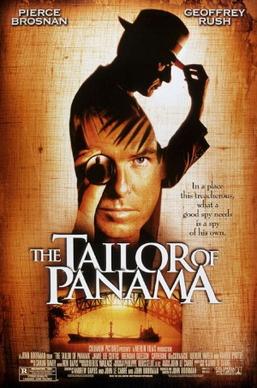
John Boorman (2001)
John le Carré's spy thriller is brought to the big screen. A British spy is banished to Panama after having an affair with an ambassador's mistress. Once there he makes connection with a local tailor with a criminal past and connections to all of the top political and gangster figures in Panama. The tailor also has a wife, who works for the canal administrator, and a huge debt. The spy's mission is to learn what the President intends to do with the Panama Canal, but he's really in business for himself, blackmailing the tailor into spinning a fantastic tale about the canal being sold to China and former mercenaries ready to topple the current government. Featuring Pierce Brosnan, Jamie Lee Curtis. Fictional account.
by Shaun Walker
(Knopf, 15 Apr 25)
More than a century ago, the new Bolshevik government began sending Soviet citizens abroad as deep-cover spies, training them to pose as foreign aristocrats, merchants, and students. Over time, this grew into the most ambitious espionage program in history. Many intelligence agencies use undercover operatives, but the KGB was the only one to go to such lengths, spending years training its spies in language and etiquette, and sending them abroad on missions that could last for decades. These spies were known as “illegals.” During the Second World War, illegals were dispatched behind enemy lines to assassinate high-ranking Nazis. Later, in the Cold War, they were sent to assimilate and lie low as sleepers in the West. The greatest among them performed remarkable feats, while many others failed in their missions or cracked under the strain of living a double life. Drawing on hundreds of hours of interviews, as well as archival research in more than a dozen countries, Shaun Walker brings this history to life in a page-turning tour de force that takes us into the heart of the KGB’s most secretive program. A riveting spy drama peopled with richly drawn characters, The Illegals also uncovers a hidden thread in the story of Russia itself. As Putin extols Soviet achievements and the KGB’s espionage prowess, and Moscow continues to infiltrate illegals across the globe, this timely narrative shines new light on the long arc of the Soviet experiment, its messy aftermath, and its influence on our world at large.

by Jason Bell
(Pegasus Books, 30 Apr 24)
In public life, Dr. Winthrop Bell was a Harvard philosophy professor and wealthy businessman. As an MI6 spy—known as secret agent A12—in Berlin in 1919, he evaded gunfire and shook off pursuers to break open the emerging Nazi conspiracy. His reports, the first warning of the Nazi plot for World War II, went directly to the man known as C, the mysterious founder of MI6, as well as to various prime ministers. But a powerful fascist politician quietly worked to suppress his alerts. Nevertheless, Dr. Bell's intelligence sabotaged the Nazis in ways only now revealed in Cracking the Nazi Code. As World War II approached, Bell became a spy once again. In 1939, he was the first to crack Hitler’s deadliest secret code: Germany’s plan for the Holocaust. At that time, the führer was a popular politician who said he wanted peace. Could anyone believe Bell’s shocking warning? Fighting an epic intelligence war from Eastern Europe and Russia to France, Canada, and finally Washington, DC, Agent A12 was a real-life 007, waging a single-handed struggle against fascists bent on destroying the Western world. Without Bell’s astounding courage, the Nazis just might have won the war.
by James Callanan
(I.B. Taurus, 15 Dec 09)
Born out of the ashes of World War II, the covert action arm of the Central Intelligence Agency (CIA) was created to counter the challenge posed by the Soviet Union and its allies and bolster American interests worldwide. It evolved rapidly into an eclectic, well-resourced organization whose activities provided a substitute for overt military action and afforded essential backup when the Cold War turned hot in Korea and Vietnam. This comprehensive examination of a still controversial subject sheds valuable new light on the undercover operations mounted by the CIA during the Cold War. Using a wide range of unpublished government records and documents, James Callanan traces the growth of the agency chronologically as it forged a covert action mission that sought to advance US foreign and defense policy in all corners of the globe. Offering a powerful perspective on a pivotal period in American history, "Covert Action in the Cold War" makes a crucial contribution to our understanding of global politics during the Cold War.
by Douglas Waller
(Dutton, 08 Apr 25)
Frank Wisner was one of the most powerful men in 1950s Washington, though few knew it. Reporting directly to senior U.S. officials--his work largely hidden from Congress and the public-- Wisner masterminded some of the CIA’s most daring and controversial operations in the early years of the Cold War, commanding thousands of clandestine agents around the world. Following an early career marked by exciting escapades as a key World War II spy under General William “Wild Bill” Donovan, Wisner quickly rose through the postwar intelligence ranks to lead a newly created top-secret unit tasked--under little oversight--with overseeing massive propaganda, economic warfare, sabotage, subversion, and guerrilla operations all over the world, including such daring initiatives as the CIA-backed coups in Iran and Guatemala. But simultaneously, Wisner faced a demon few at the time understood: bipolar disorder. When this debilitating disease resulted in his breakdown and transfer to a mental hospital, the repercussions were felt throughout Washington’s highest levels of power. Waller’s sensitive and exhaustively researched biography is the riveting story of both Frank Wisner as a national figure who inspired a cadre of future CIA secret warriors, and also an intimate and empathetic portrait of a man whose harrowing struggle with bipolar disorder makes his impressive accomplishments on the world stage even more remarkable.
by Sarah Oates and Gordon Neil Ramsay
(Oxford University Press, 04 June 2024)
The U.S. media has been tainted with Russian disinformation, but the more significant threat is how the Right has embraced the Russian model of the news media as a vehicle for propaganda. This could not have happened without Donald Trump, who has been aided and abetted by politicians and news outlets that favor persuasion over information. From his inauguration onwards, Trump has shown allegiance to the Kremlin propaganda playbook―he consistently denies reality, amplifies lies, vilifies the free media, and broadcasts disinformation. Seeing Red breaks new ground in investigating the scope of Russian disinformation, arguing that key politicians and media outlets in the United States have facilitated the dissemination of Russian propaganda. From the 2020 elections to the Capitol Insurrection to the war in Ukraine, Sarah Oates and Gordon Neil Ramsay examine the penetration of key Kremlin strategic narratives that attempt to project Russian power, blame NATO for Russian aggression, and attack democracy via the U.S. news. Despite knowledge of the risk and resourceful work on tracking down Russian propaganda in the United States, the problem of foreign disinformation continues to this day. As Oates and Ramsay argue, this is in part due to exploitation of the American tradition of free speech and the open nature of the U.S. media system. Yet, the much more dangerous menace lies not in how foreign governments attempt to manipulate the media, but in how our media system has been compromised by domestic actors who follow an authoritarian playbook and promote anti-democratic narratives. When it is hard to tell the difference between what the Russians are saying about the Democrats and how Fox News is covering Joe Biden, it is time to realize that some American outlets have crossed the line from news to propaganda.
by James M. Olson
(Georgetown University Press, 01 May 19)
The United States is losing the counterintelligence war. Foreign intelligence services, particularly those of China, Russia, and Cuba, are recruiting spies in our midst and stealing our secrets and cutting-edge technologies. In To Catch a Spy: The Art of Counterintelligence, James M. Olson, former chief of CIA counterintelligence, offers a wake-up call for the American public and also a guide for how our country can do a better job of protecting its national security and trade secrets. Olson takes the reader into the arcane world of counterintelligence as he lived it during his thirty-year career in the CIA. After an overview of what the Chinese, Russian, and Cuban spy services are doing to the United States, Olson explains the nitty-gritty of the principles and methods of counterintelligence. Readers will learn about specific aspects of counterintelligence such as running double-agent operations and surveillance. The book also analyzes twelve real-world case studies to illustrate why people spy against their country, the tradecraft of counterintelligence, and where counterintelligence breaks down or succeeds. A "lessons learned" section follows each case study.
James Hawes (2025)
When his supervisors at the CIA refuse to take action after his wife is killed in a London terrorist attack, a decoder takes matters into his own hands. Fictional account.
Steven Soderbergh (2025)
When intelligence agent Kathryn Woodhouse is suspected of betraying the nation, her husband - also a legendary agent - faces the ultimate test of whether to be loyal to his marriage, or his country. Fictional account.
by Eric OʻNeill
(Crown, 26 Mar 19)
Eric O’Neill was only twenty-six when he was tapped for the case of a lifetime: a one-on-one undercover investigation of the FBI’s top target, a man suspected of spying for the Russians for nearly two decades, giving up nuclear secrets, compromising intelligence, and betraying US assets. With zero training in face-to-face investigation, O’Neill found himself in a windowless, high-security office in the newly formed Information Assurance Section, tasked officially with helping the FBI secure its outdated computer system against hackers and spies—and unofficially with collecting evidence against his new boss, Robert Hanssen, an exacting and rage-prone veteran agent with a fondness for handguns. In the months that follow, O’Neill’s self-esteem and young marriage unravel under the pressure of life in Room 9930, and he questions the very purpose of his mission. But as Hanssen outmaneuvers an intelligence community struggling to keep up with the new reality of cybersecurity, he also teaches O’Neill the game of spycraft. The student will just have to learn to outplay his teacher if he wants to win. A tension-packed stew of power, paranoia, and psychological manipulation, Gray Day is also a cautionary tale of how the United States allowed Russia to become dominant in cyberespionage—and how we might begin to catch up.
by David Alan Johnson
(18 June 2024)
Admiral Wilhelm Canaris, Adolf Hitler’s chief of military intelligence, accomplished something that neither President Franklin D. Roosevelt nor Prime Minister Winston Churchill could ever achieve – he saved the lives of hundreds Jewish refugees and other racial and political undesirables by rescuing them from Nazi Germany and other Nazi-occupied countries. Seen as a quiet and uninteresting career naval officer, Canaris’ unmilitary bearing was actually a cover he had devised for himself, camouflaging a very sharp, and rebellious, mind. Admiral Canaris is a page-turning story of one of the most important and least likely saboteurs within the Third Reich. Initially a supporter of Hitler and the plan to re-arm Germany, Canaris was appointed to direct the Abwehr – Germany’s military intelligence agency – after a long career in the navy built on fostering relationships with foreign agents. But when the Nazis began their campaign of assassination and terror, including the systematic murder of thousands of Jews and other “undesirables,” the admiral became determined to do everything possible to fight Hitler and the Nazis. After the failure of Operation Pastorious, a spy mission to disarm American manufacturing plants, Hitler extolled his executive committee for risking German lives instead of the lives of “criminals or Jews.” That speech gave Canaris an idea. He would go on to disguise refugees as Abwehr agents and sent them to South America, under the official designation of “infiltration agents,” where they joined hundreds of authentic German agents operating in Argentina, Uruguay, Brazil, and nearly every other South American country. Canaris’ anti-Nazi activities, along with some health issues, finally resulted in his dismissal as head of the Abwehr. He was suspected of inefficiency and incompetence by senior Nazi officers – who had no idea that he had turned against the Hitler regime -- and exiled to a desk-job in the Economic Warfare Department. Little did the Fȗhrer know, this placement was the best thing that could have happened to Canaris’ resistance efforts. Through in-depth research and affirming storytelling, author David Alan Johnson paints the picture of a driven and devious mind working amidst the darkest evil to save all those that he could.
by Kevin Riehle
(Lynne Rienner Publishers, Inc., 25 May 25)
"An essential guide to counterintelligence, blending theory with case studies to fill a crucial gap in the intelligence literature. Both insightful and accessible, this book offers a rare, practitioner-driven perspective for anyone keen to explore the intricacies of CI." ―Giangiuseppe Pili, James Madison University What is the core purpose of counterintelligence? What does it involve? To answer these questions, Kevin Riehle explains in detail how counterintelligence analysis supports the mission of thwarting adversaries―how a foreign entity's intelligence cycle can be exploited, disrupted, or manipulated―in order to gain decision advantage. Case studies of operations involving the Soviet Union and Russia also illustrate how counterintelligence-derived information can support broader US national security decisionmaking.
by Kevin Bryant
(Rowman and Littlefield Publishers, 13 Jul 22)
Spies disguised as priests. Secret surveillance of targets’ movements. Radio frequency jamming. Tapped telephones. These might sound like acts of espionage right out of the Cold War or a spy movie—but in fact came straight from the National Football League. In Spies on the Sidelines: The High-Stakes World of NFL Espionage, Kevin Bryant provides the first in-depth investigation of spying in professional football, as well as the countermeasures utilized to defend against these threats. Spanning across all teams and eras, Bryant shines a light on the shady world of NFL reconnaissance—from clandestine photography and hidden draft prospects to listening devices and stolen documents—along with the permissible, if sometimes questionable, spy techniques teams utilize day in and day out to gain an advantage over their opponents. Written by a former Special Agent with decades of experience collecting and safeguarding information for the Department of Defense, Spies on the Sidelines reveals that, behind the game-day action, professional football can be as cloak-and-dagger as American intelligence agencies. This fascinating and expansive compilation of NFL spy anecdotes exposes the extraordinary measures teams are willing to take in order to win.

by Peter Theroux
(30 May 24)
In Obscura is a savory literary confection detailing its author’s move from the light of day in publishing and journalism into the “dark” world of the CIA’s clandestine analysis, counterterrorism, and black site work … via Damascus, the Golan Heights, and Hollywood. A National Geographic fieldworker based in Los Angeles, Theroux doubled as a practitioner of a hidden profession—translation—and found kindred spirits in other hidden professionals, the stunt actors who double as movie stars. When he takes things a step further, into the entirely covert world of intelligence, he gives us a guided tour of the upside-down world where fame is anathema and career success is measured by deeper and darker assignments. Inspired by Hollywood memoirs that explain in nuts-and-bolts fashion the world of movie making to cinema buffs, Theroux writes In Obscura as a nuts-and-bolts account of what CIA officers do all day—whether they report to work at Headquarters, the White House, or a war zone.
by Jeremy Hurewitz
(Diversion Books, 27 Aug 24)
Tapping into the history of intelligence-gathering and his work with former agents of the CIA, FBI, and other federal departments, Jeremy Hurewitz, a foremost corporate sales and security expert, offers field-tested spycraft strategies and government-agency tactics anyone can use to build relationships, persuade, and sell anything. Hurewitz has built his career around CIA case officers, FBI agents, and government officials—people like Steve Romano, former Chief Negotiator of the FBI; Mark Sullivan, former Director of the Secret Service; General Stanley McChrystal (Ret.), former Commander of the Joint Special Operations Command; and John Cipher, former member of the CIA's Senior Intelligence Service. Drawing on in-depth interviews about their skillsets, stunning spy-world anecdotes, and science-backed principles of behavioral intelligence, Hurewitz has created a handbook of lessons and techniques that will strengthen your ability to connect, entice, and make deals—in business and everyday life. Though a spy's targets may be odious—terrorists, criminals, corrupt diplomats, and more—the agent's focus is on cultivating relationships and understanding motivations to gather information, free hostages, or procure money. Elicitation, Radical Empathy, and RPM (Rationalize, Project Blame, and Minimize Fault) are just a few methods in this persuasion playbook from the real world of international espionage. With a foreword by Robert Grenier, former Director of the CIA's Counterterrorism Center, Sell Like a Spy puts James Bond in its dust, making you a true agent of persuasion.
by Blaine Harden
(Viking, 03 Oct 17)
In 1946, master sergeant Donald Nichols was repairing jeeps on the sleepy island of Guam when he caught the eye of recruiters from the army's Counter Intelligence Corps. After just three months' training, he was sent to Korea, then a backwater beneath the radar of MacArthur's Pacific Command. Though he lacked the pedigree of most U.S. spies—Nichols was a 7th grade dropout—he quickly metamorphosed from army mechanic to black ops phenomenon. He insinuated himself into the affections of America’s chosen puppet in South Korea, President Syngman Rhee, and became a pivotal player in the Korean War, warning months in advance about the North Korean invasion, breaking enemy codes, and identifying most of the targets destroyed by American bombs in North Korea. But Nichols's triumphs had a dark side. Immersed in a world of torture and beheadings, he became a spymaster with his own secret base, his own covert army, and his own rules. He recruited agents from refugee camps and prisons, sending many to their deaths on reckless missions. His closeness to Rhee meant that he witnessed—and did nothing to stop or even report—the slaughter of tens of thousands of South Korean civilians in anticommunist purges. Nichols’s clandestine reign lasted for an astounding eleven years. In this riveting book, Blaine Harden traces Nichols's unlikely rise and tragic ruin, from his birth in an operatically dysfunctional family in New Jersey to his sordid postwar decline, which began when the U.S. military sacked him in Korea, sent him to an air force psych ward in Florida, and subjected him—against his will—to months of electroshock therapy. But King of Spies is not just the story of one American spy. It is a groundbreaking work of narrative history that—at a time when North Korea is threatening the United States with long-range nuclear missiles—explains the origins of an intractable foreign policy mess.
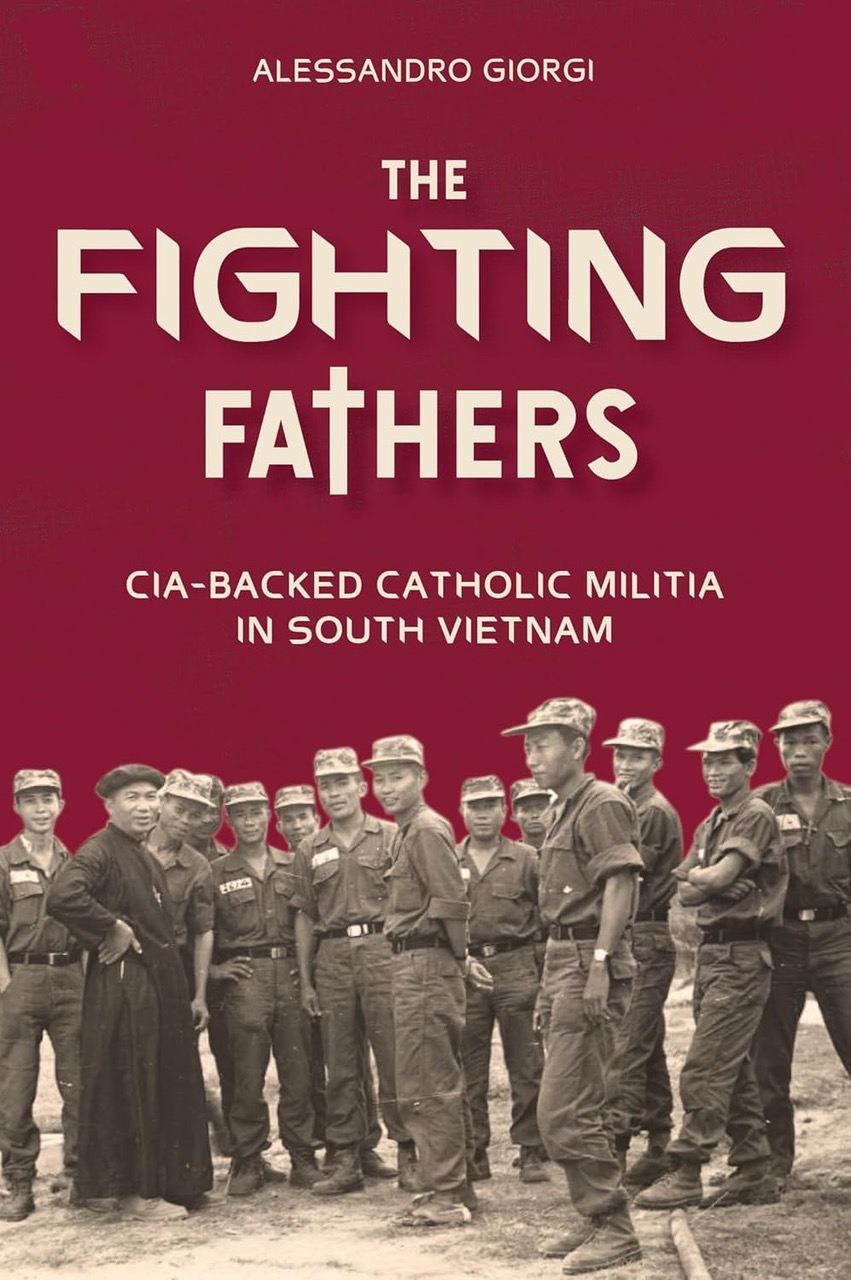
by Alessandro Giorgi
(Schiffer Military History, 28 Sep 24)
During the early years of US involvement in Vietnam, the CIA helped arm militia groups in South Vietnam referred to as the “Fighting Fathers.” The name was a reference to the Catholic priests who organized the fighting groups. The fathers fought alongside their parishioners to defend their localities from the Communist insurgency, the Vietcong. Author Alessandro Giorgi has studied the subject in unprecedented detail, conducting original research in recently declassified archives and interviewing former US intelligence personnel and Italian missionary witnesses.

by Matthew Hefner
(CSSC, 01 Oct 224)
Edited by our AJI Research Fellow, Dr. Matthew Hefner, Intelligence and Contemporary Conflict is designed for impact - a collection filled with insight from some of the world’s leading specialists of intelligence history, including Dr. Gill Bennett, former Chief Historian of the UK’s Foreign and Commonwealth Office, Professor Michael Goodman, Official Historian of the UK’s Joint Intelligence Committee, Professor John Ferris, the Authorized Historian of the UK’s Government Communications Headquarters, and Dr. Calder Walton, Assistant Director of the Belfer Center’s Intelligence Project at the Harvard Kennedy School. With a focus on intelligence and communication in the most pressing issues of international security, the book will be useful for scholars, practitioners and enthusiasts alike. The collection was published with the support of the Ax:son Johnson Institute for Statecraft and Diplomacy and the Axel and Margaret Ax:son Johnson Foundation for Public Benefit and beautifully produced by Bokförlaget Stolpe.
Michael Kaschner (2019)
Some just counted tanks, others stole blueprints for bombs. The Cold War was the battleground for thousands of spies and spotters. Even the Allied Military Missions in Germany doubled as covert observers in the spying game. Whether military observers, spies or traitors - they all acted as suppliers of intelligence for their masters in Washington or Moscow. Many of them risked their lives, and quite a few lost it. Yet, did the spying game really contribute to keep the Cold War cold in the end?
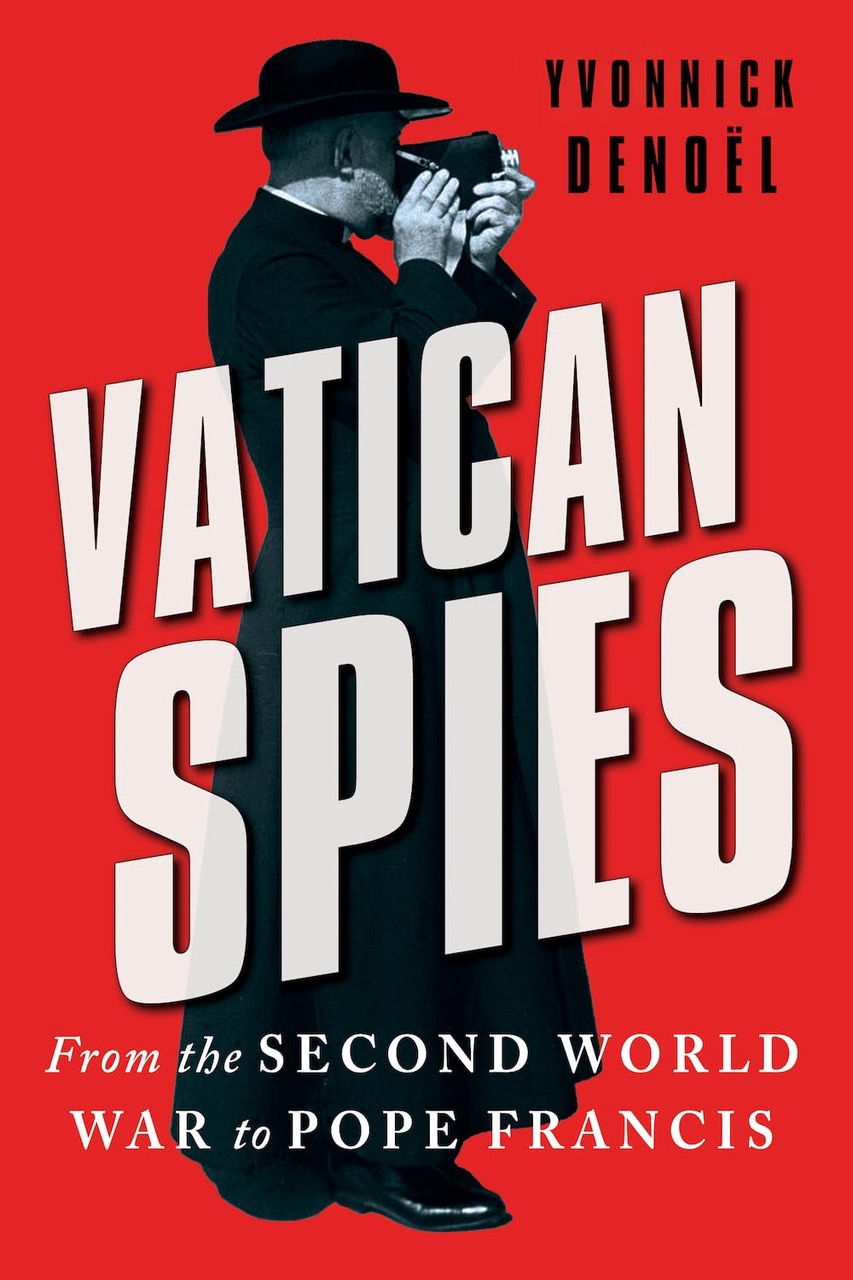
by Yvonnick Denoël, Hurst, 03 February 2025
"Officially" the Vatican has no espionage service; but does no one carry out intelligence operations on its behalf? During the Second World War and Cold War, Rome was teeming with spies. A band of undercover monsignors and priests hunted for Vatican "moles", led clandestine diplomacy, investigated assassinations of priests and other scandals threatening the Church, and conducted high-risk missions behind the Iron Curtain. Drawing on freshly released archives of foreign services that worked with or against the Holy See, Vatican Spies reveals eighty years of shadow wars and dirty tricks. These include infiltrating Russian-speaking priests into the Soviet Union; secret negotiations between John XXIII and Khrushchev; the future Paul VI"s close relationship with the CIA; the Vatican's infiltration by Eastern Bloc intelligence; the battles between the Jesuits and Opus Dei; and the secret bank funds channeled first to fight communism in South America, then to support Solidarity in Poland. This entertaining book journeys right to the present, uncovering startling machinations under Benedict XVI and, today, Pope Francis.
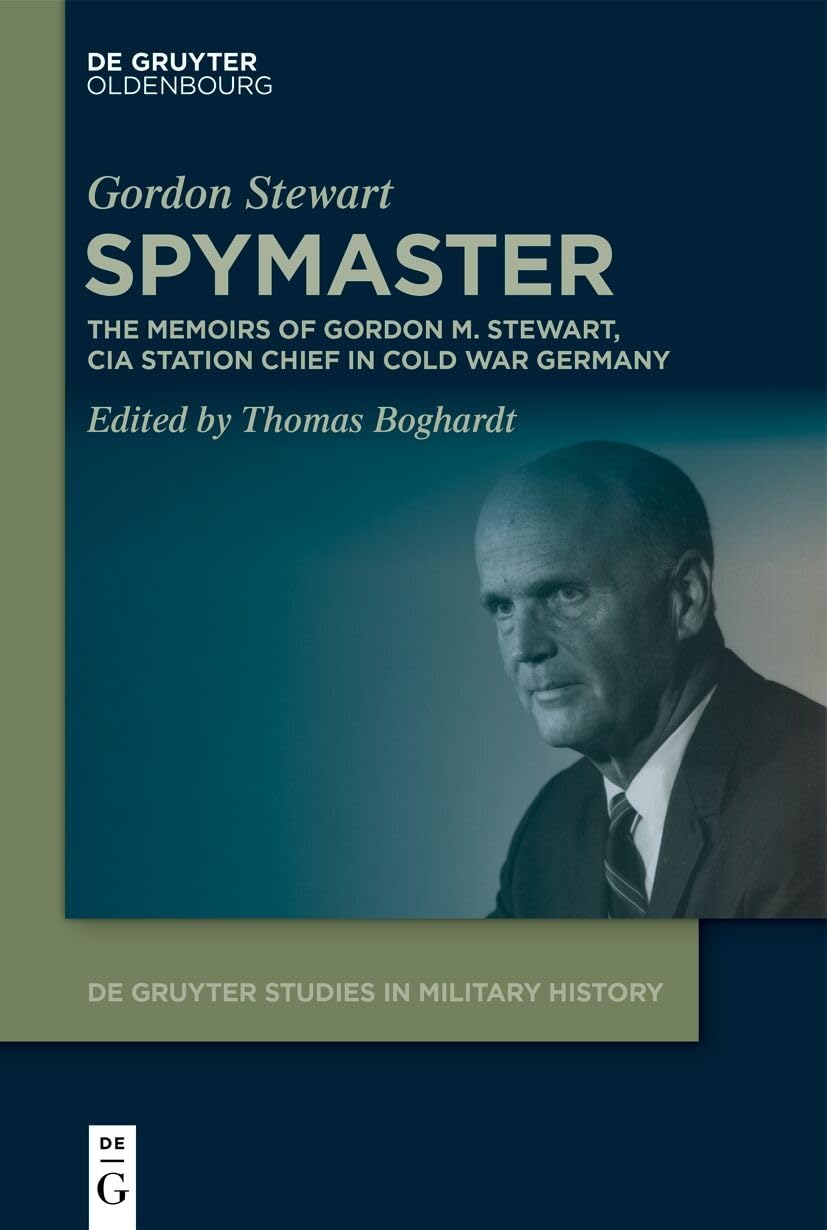
by Gordon Stewart (Author), Thomas Boghardt (Editor), De Gruyter Oldenbourg, 07 October 2024
Germany was the epicenter of the Cold War. Across the Iron Curtain, hundreds of thousands of soldiers faced each other, and if World War III were to break out, contemporaries feared, surely it would happen here. The country’s frontline status made it an El Dorado for spies, who gathered information on military targets, penetrated political parties, and trained partisans for stay-behind operations. For the Americans, the Central Intelligence Agency (CIA) came to take the lead in this silent – and sometimes not so silent – contest. In the heyday of the Cold War, the agency’s German station employed nearly two thousand officers – in addition to countless spies and informants. Ultimately, this covert empire reported to the CIA station chief in West Germany and his deputy. And for many years, either of those positions was held by Gordon Matthews Stewart.
Gordon Stewart was well prepared for this assignment. He studied German history and literature during the 1930s and lived in Munich and Hamburg as a visiting student. Here, he personally witnessed the Nazi takeover, even catching a glimpse of Adolf Hitler at one of his notorious rallies. When the United States entered the war in 1941, the newly established Office of Strategic Services (OSS) recruited him as a specialist on German affairs. In the summer of 1945, he arrived in Germany with an OSS detachment. Eventually, the OSS morphed into the CIA, and Gordon Stewart would run the agency’s espionage organization in Germany for some twenty years.
From CIA headquarters in Heidelberg, Karlsruhe, Frankfurt, and eventually, Bonn, Mr. Stewart directed all intelligence operations in central Europe. Initially, he hunted down Nazi war criminals, but the Cold War compelled him to bend his efforts toward the Soviet bloc. During the 1950s, Mr. Stewart directed espionage operations against East Germany, organized the training of Ukrainian partisans at U.S. bases in Bavaria, and participated in a scheme to dig a tunnel into East Berlin to eavesdrop on Soviet and East German communications. He also recruited and handled sources inside the West German government, including the chief of the Bundesnachrichtendienst, Reinhard Gehlen; the highest-ranking West German military officer, General Adolf Heusinger; and top policy-makers of the Christian and social democratic parties.
Mr. Stewart’s memoirs, introduced by renowned intelligence scholar Thomas Boghardt, offer not only a fascinating look inside the CIA’s largest overseas station; they also tell the story of a deeply conscientious and highly accomplished intelligence officer, whose experience, intellect, and moral compass shaped American policy toward Germany and Europe during the turbulent years of the early Cold War.
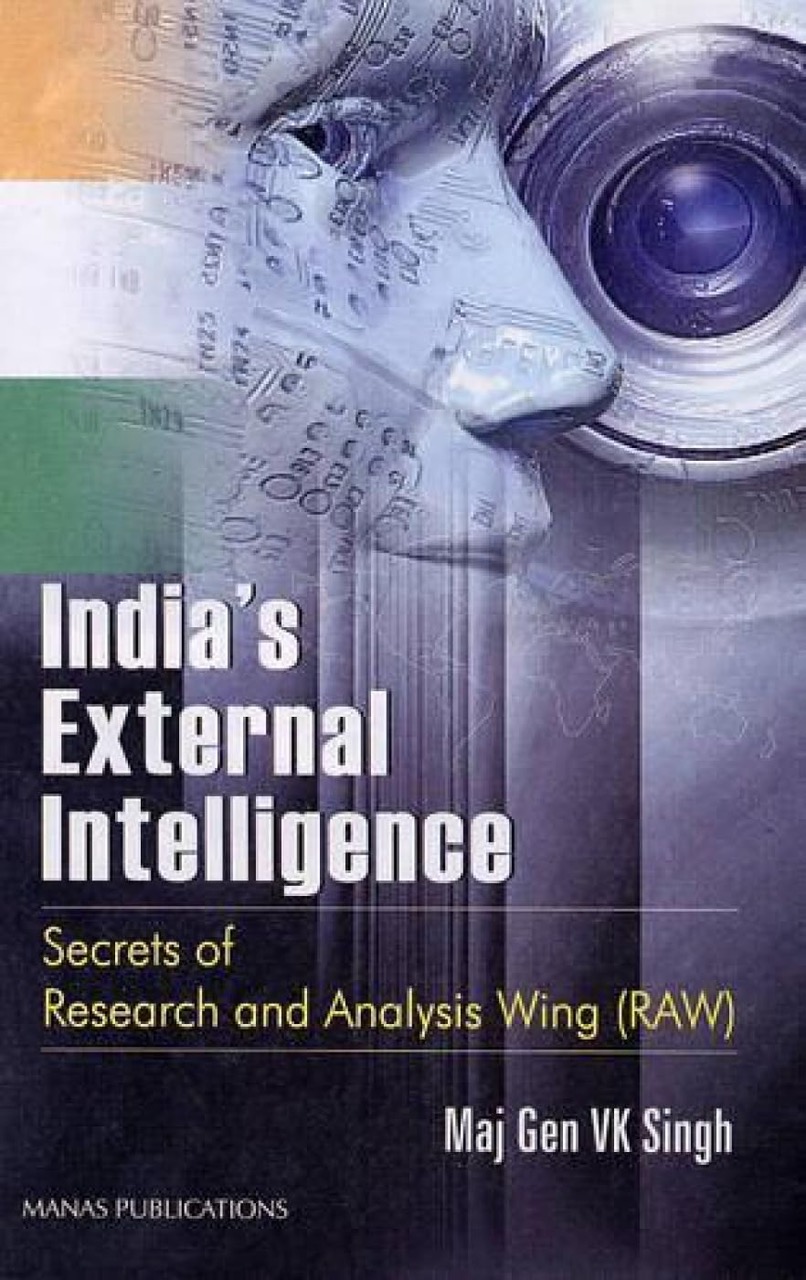
by V.K. Singh, Manas Publications, 30 July 2007
The present book is the first account by a person who has actually served in RAW at a senior level. Though not an insider, he was part of the organisation for a little less than four years and was able to see its functioning from close quarters. Since he was concerned with signal intelligence rather than human intelligence operations, most of the coverage is devoted to the former. The book brings to light several lacunae in the functioning of the country's top intelligence agency, the most glaring being the anomalies in procurement of equipment, lack of accountability and our dependence on foreign sources, with the resultant threat to national security.
Some of the hitherto untold stories recounted in the book: